
How Molded Fiber Tableware Is Manufactured: From Sugarcane Bagasse to Finished Packaging
- Jenny

- Mar 11
- 4 min read
Updated: Mar 12
Introduction
Compostable tableware made from molded fiber has become one of the most widely adopted alternatives to plastic food packaging. Plates, trays, bowls, and takeaway containers made from plant fiber are now used by restaurants, catering companies, and food retailers across many countries.
Although these products appear simple, the manufacturing process behind molded fiber packaging involves several carefully controlled stages. From raw material preparation to precision molding and drying, each step plays an important role in determining the final product’s strength, safety, and environmental performance.
Understanding how molded fiber tableware is produced helps buyers better evaluate suppliers, product quality, and production reliability.
Manufacturers such as MANA ECO operate large-scale molded fiber production systems designed to convert agricultural by-products like sugarcane bagasse into durable food packaging.

Step 1: Raw Material Preparation – Turning Agricultural Waste into Fiber
The most common raw material used for compostable tableware is sugarcane bagasse, which is the fibrous residue left after sugarcane is processed for sugar extraction.
Instead of being discarded or burned, bagasse can be repurposed as a renewable material for molded fiber products.
The first stage of production involves collecting, cleaning, and preparing the bagasse fibers. The material is processed to remove impurities and ensure consistent fiber quality. After this preparation stage, the fibers are ready for pulping.
This approach transforms agricultural waste into a valuable resource for sustainable packaging manufacturing.

Step 2: Pulping – Creating the Fiber Slurry
Once the raw bagasse material has been prepared, it enters the pulping process.
During pulping, the fibers are mixed with water to form a slurry. Mechanical agitation breaks down the plant material and separates the fibers, creating a uniform mixture that can be molded into different shapes.
The quality of the pulp mixture is extremely important. Fiber length, moisture levels, and material consistency all influence the strength of the finished product.
Large manufacturers such as MANA ECO carefully control pulp composition to ensure stable product performance across different production batches.

Step 3: Precision Molding – Forming the Product Shape
After pulping, the fiber slurry is transferred to forming machines equipped with precision molds.
These molds determine the final shape of the tableware, whether it is a plate, clamshell container, bowl, or tray.
Vacuum suction pulls the fiber slurry onto the mold surface, where the fibers interlock and begin forming a solid structure. Excess water is removed during this process.
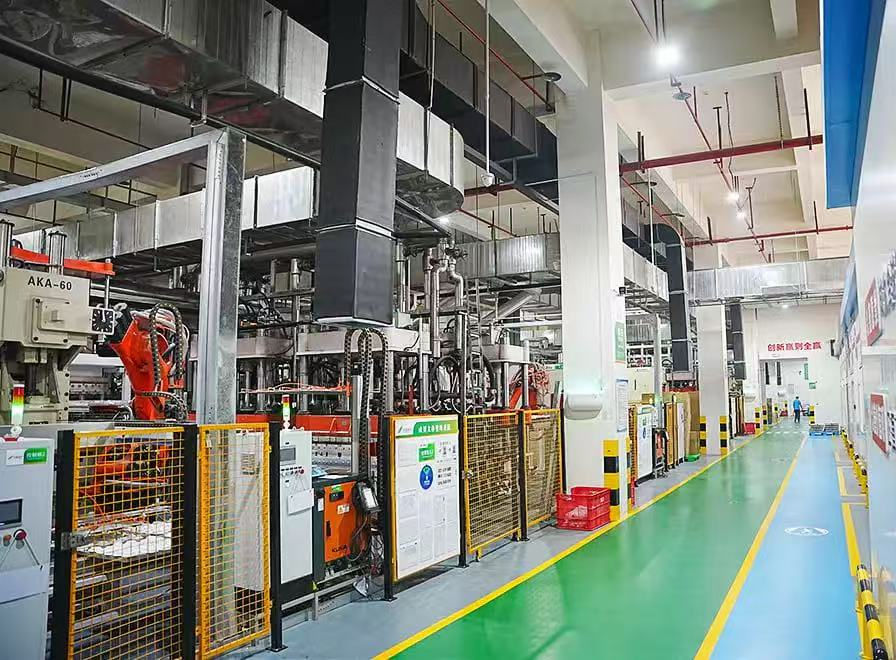
Modern molded fiber factories use automated forming machines that allow high-volume production while maintaining consistent product dimensions.
The design and quality of the molds play a critical role in achieving smooth surfaces and accurate shapes.

Step 4: Hot Pressing and Drying
Once the product shape has been formed, it must be dried and strengthened.
This is typically done through hot pressing or heated drying systems. The formed fiber products are transferred into heated molds or drying ovens where moisture is removed.
Heat and pressure help the fibers bond together, creating a stronger and more rigid structure. This step also improves the surface finish of the tableware.
Advanced production lines can carefully control temperature, pressure, and drying time to ensure consistent quality.
Manufacturers like MANA ECO use automated drying systems designed to produce food-grade molded fiber products suitable for international markets.
Step 5: Trimming and Quality Inspection
After drying, the molded fiber products move to trimming and finishing stages.
Any excess edges are removed, and the products are inspected to ensure they meet dimensional and quality standards.
Quality control checks may include:
Visual inspection
Strength testing
Oil resistance testing
Food safety verification
Reliable suppliers implement strict quality control procedures to maintain consistency across large production volumes.
Step 6: Sterilization and Packaging
Before products are packed for shipment, they typically undergo sterilization or hygienic treatment processes to ensure food safety.
Afterward, the products are counted, packed, and prepared for export.
Packaging may vary depending on buyer requirements. Some customers request retail-ready packaging, while others prefer bulk packaging for distribution or foodservice operations.
Export-oriented manufacturers often provide flexible packaging solutions for different international markets.
Technology Improvements in Modern Molded Fiber Manufacturing
Over the past decade, molded fiber production technology has improved significantly.
Earlier molded pulp products often had rough surfaces and inconsistent shapes. Today’s manufacturing systems use precision molds, automated forming equipment, and controlled drying processes to produce much more refined packaging.
These improvements allow molded fiber tableware to compete with plastic products in both performance and appearance.
Companies such as MANA ECO continue investing in advanced machinery and mold development to improve product strength, reduce production waste, and increase manufacturing efficiency.
Why Molded Fiber Is Becoming a Preferred Packaging Material
The increasing popularity of molded fiber tableware is driven by several factors.
First, the raw materials are renewable and widely available. Agricultural by-products such as sugarcane bagasse provide a sustainable feedstock for packaging production.
Second, molded fiber products offer good heat resistance and structural strength, making them suitable for hot meals and takeaway packaging.
Finally, molded fiber products are widely accepted as compostable solutions in many markets, helping foodservice companies reduce reliance on traditional plastic packaging.
FAQ Section
What is molded fiber tableware made from?
Most molded fiber tableware is produced from plant-based materials such as sugarcane bagasse, bamboo pulp, or recycled paper fibers.
Is bagasse tableware safe for food use?
Yes. Bagasse tableware is widely used for food packaging and can handle hot meals, sauces, and oils when properly manufactured.
Is molded fiber tableware compostable?
Many molded fiber products are certified compostable under standards such as EN13432 or BPI, depending on the manufacturer and certification.
Why do restaurants use bagasse containers?
Bagasse containers are durable, heat resistant, and made from renewable plant fibers, making them a practical alternative to plastic takeaway packaging.
Conclusion
Molded fiber tableware manufacturing combines traditional pulp processing with modern industrial automation.
From agricultural waste materials to finished food containers, the process transforms plant fibers into durable packaging products that support the growing demand for sustainable foodservice solutions.
As global regulations and consumer expectations continue to push the packaging industry toward environmentally responsible materials, molded fiber technology is likely to play an increasingly important role in the future of food packaging.
Manufacturers with strong technical expertise and large-scale production capabilities, such as MANA ECO, are helping drive this transition by delivering reliable compostable packaging to global markets.
Get in Touch for Quote and free Samples



Comments