
Why the Molded Fiber Packaging Market Is Growing Rapidly

In recent years, molded fiber packaging has emerged as one of the fastest-growing segments in the global packaging industry.
Once primarily used for protective packaging such as egg cartons, molded fiber is now widely used in foodservice packaging, electronics protection, and sustainable product packaging.
This shift reflects broader changes in consumer behavior, environmental regulations, and corporate sustainability strategies.

Rising Demand for Sustainable Packaging
Bagasse containers are made from sugarcane fiber. They are better for the environment than plastic. They break down in about 90 days and can be composted. Bagasse works well with hot and greasy food. It resists heat and does not leak harmful chemicals. Plastic is cheaper and handles water better, but it pollutes the environment for a long time.
Disposable packaging is widely used
One of the main drivers behind the growth of molded fiber packaging is the increasing demand for environmentally responsible materials.
Consumers are becoming more aware of plastic pollution, and many businesses are responding by adopting packaging solutions that reduce environmental impact.
This trend is particularly visible in the foodservice industry, where disposable packaging is widely used.
Regulatory Pressure on Plastic Packaging
Governments around the world are introducing policies aimed at reducing plastic waste.
These regulations include:
bans on certain single-use plastics
recycling mandates
environmental taxes on plastic packaging
Such policies are encouraging manufacturers to explore alternative materials.
Molded fiber packaging made from agricultural residues such as sugarcane bagasse has become one of the most practical options.
Bagasse tableware is manufactured by processing sugarcane residue (bagasse) through washing, pulping, molding, heating, and trimming.
Technological Advances in Molded Fiber Production
Another factor contributing to market growth is the improvement of molded fiber manufacturing technology.
Modern production lines allow manufacturers to produce strong, lightweight, and heat-resistant packaging products at industrial scale.
This makes molded fiber suitable for applications that were previously dominated by plastic containers.
Applications in the Foodservice Industry
Today molded fiber packaging is widely used in:
takeaway food containers
disposable plates and bowls
clamshell packaging
cup lids
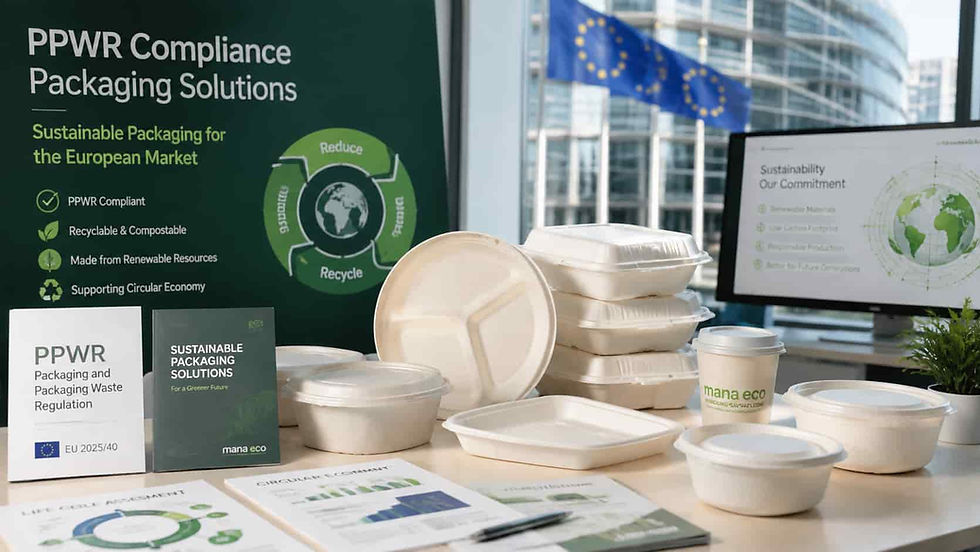
These products are commonly made from sugarcane bagasse, wheat straw, or other plant fibers, these is the future of disposable tableware materials.
Manufacturers such as MANA ECO are expanding production to meet global demand for molded fiber tableware.
FAQ
What is molded fiber packaging?
Molded fiber packaging is a type of packaging made from natural plant fibers such as sugarcane bagasse, bamboo pulp, or recycled paper. The material is molded into different shapes using specialized production equipment.
Why is molded fiber packaging becoming popular?
Molded fiber packaging is gaining popularity because it is made from renewable resources and can replace certain types of plastic packaging in foodservice and consumer products.
What products can be made from molded fiber?
Common molded fiber products include:
disposable plates
food containers
bowls
clamshell packaging
protective packaging for electronics
Is molded fiber packaging compostable?
Many molded fiber products made from natural plant fibers are compostable under appropriate composting conditions, making them attractive for businesses seeking sustainable packaging solutions.
Future Outlook
Industry analysts expect the molded fiber packaging market to continue expanding over the next decade.
As environmental awareness increases and regulations on plastic packaging tighten, plant-fiber packaging solutions are likely to become a central part of the global packaging industry.


Comments