
The Future of Disposable Tableware Materials: Plastic, Paper, Bamboo, PLA and Bagasse

Introduction
The global foodservice industry is going through a major transformation. Governments are tightening regulations on single-use plastics, consumers are becoming more environmentally conscious, and restaurants are under increasing pressure to adopt sustainable packaging.
As a result, the materials used to produce disposable tableware are rapidly evolving. Traditional plastics are facing regulatory challenges, while alternative materials such as molded fiber, bamboo, and plant-based bioplastics are gaining attention.
Understanding the strengths and limitations of different materials is essential for distributors, importers, and foodservice brands that want to make long-term purchasing decisions.

Why Material Choice Matters in Food Packaging
Disposable tableware is no longer just about convenience. Today, buyers must consider several key factors:
Environmental impact
Government regulations
Cost stability
Supply chain reliability
Consumer perception
The material used in packaging directly influences how a brand is perceived by customers and regulators. Choosing the right material can reduce environmental impact while maintaining operational efficiency.
Plastic: Still Widely Used but Under Pressure
Plastic remains the most widely used material for disposable tableware worldwide. Materials such as PP and PET offer durability, heat resistance, and low manufacturing costs.
However, plastic packaging is facing increasing scrutiny due to environmental concerns. Many countries and regions have already introduced restrictions or taxes on single-use plastics.
Another challenge is price volatility. Because plastic is derived from petroleum, its cost is closely linked to fluctuations in global energy markets.
While plastic will likely remain part of the packaging industry for years to come, its long-term role is gradually being reduced.
Paper Tableware: Familiar but Not Always Ideal
Paper is often viewed as a natural alternative to plastic. Paper cups, plates, and containers are widely used in cafés, restaurants, and takeaway services.
However, paper packaging has some limitations. To hold liquids or oily food, many paper products require plastic or chemical coatings. This can make recycling more complicated.
In addition, large-scale paper production relies heavily on forestry resources, which raises sustainability concerns in some regions.
Despite these challenges, paper remains an important option in the disposable packaging industry.
Bamboo: A Premium but Limited Material
Bamboo tableware has attracted attention because bamboo is a rapidly renewable resource. It grows quickly and can be harvested with relatively low environmental impact.
Bamboo products are often marketed as premium eco-friendly tableware and are commonly used in specialty restaurants or environmentally focused brands.
However, bamboo tableware is generally more expensive to produce compared to molded fiber products. Production capacity is also more limited, which restricts its widespread use in large foodservice supply chains.
For niche markets, bamboo remains an appealing material, but scalability can be a challenge.
PLA: Plant-Based but Industrially Compostable
PLA (polylactic acid) is a bioplastic made from fermented plant starch, typically derived from corn or sugar crops.
Because PLA is produced from renewable resources, it is often promoted as a sustainable alternative to petroleum-based plastics.
However, PLA has some practical limitations. It typically requires industrial composting facilities to break down properly. In regions without such infrastructure, PLA products may end up in regular waste streams.
PLA also has relatively low heat resistance, which limits its use in hot food applications.
For certain cold-food packaging scenarios, PLA can be a useful option, but it is not always a universal solution.
Bagasse: A Practical Solution from Agricultural Waste
Among emerging materials, sugarcane bagasse has gained significant attention in recent years.
Bagasse is the fibrous residue left after sugarcane is processed for juice extraction. Instead of being discarded or burned, this agricultural byproduct can be transformed into molded fiber tableware.
Bagasse products offer several practical advantages:
Made from renewable agricultural waste
Compostable under suitable conditions
Suitable for hot and cold food
Oil and water resistant
Compatible with large-scale production
Because bagasse uses existing agricultural resources, it does not require additional land cultivation specifically for packaging materials.
These characteristics make bagasse tableware particularly attractive for restaurants, food delivery services, and international distributors seeking sustainable packaging solutions.
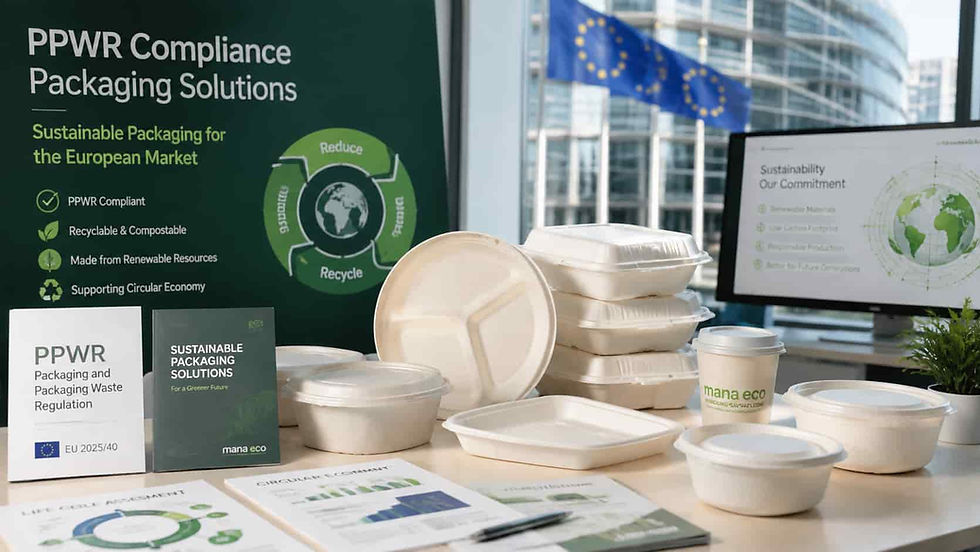
Manufacturers such as MANA ECO are expanding global supply by producing high-quality molded fiber tableware for foodservice markets worldwide.
How the Market May Evolve in the Coming Years
The future of disposable tableware will likely involve a combination of materials rather than a single solution.
Plastic may continue to be used where durability and low cost are essential. Paper will remain common in beverage packaging. Bamboo may serve premium markets, while PLA could expand where composting infrastructure improves.
However, molded fiber materials made from agricultural residues—such as bagasse—are increasingly positioned as a balanced solution that combines sustainability, functionality, and scalability.
As environmental regulations become stricter and global supply chains adapt, materials that offer both ecological and economic advantages are likely to play a growing role in the packaging industry.

FAQ
What is the most sustainable material for disposable tableware?
There is no single material that fits every application, but many foodservice businesses are moving toward plant-based alternatives. Materials such as molded fiber made from sugarcane bagasse are increasingly popular because they use agricultural byproducts and can be compostable under proper conditions. Compared with petroleum-based plastics, these materials generally have a lower environmental footprint.
Is bagasse better than plastic for food packaging?
Bagasse tableware offers several environmental advantages compared with conventional plastic packaging. It is made from the fibrous residue of sugarcane processing and can be compostable in suitable environments. In addition, bagasse containers are resistant to heat, oil, and moisture, which makes them suitable for many foodservice applications.
What are the limitations of PLA tableware?
PLA is a plant-based bioplastic made from fermented plant starch. While it is derived from renewable resources, PLA typically requires industrial composting facilities to break down effectively. It also has lower heat resistance compared with some other packaging materials, which can limit its use with hot foods.
Why are restaurants looking for alternatives to plastic tableware?
Restaurants and food delivery businesses are facing increasing pressure to reduce plastic waste. Many regions have introduced regulations that restrict certain types of single-use plastic packaging. At the same time, consumers are becoming more environmentally conscious and prefer sustainable food packaging options.
Why is bagasse tableware becoming more popular globally?
Bagasse tableware has gained attention because it combines sustainability with practicality. It is made from agricultural waste, can handle hot and cold food, and is suitable for large-scale production. Manufacturers such as MANA ECO are helping expand the availability of molded fiber tableware for international foodservice markets.
Conclusion
The search for sustainable food packaging materials is reshaping the disposable tableware industry. Businesses are no longer focused only on price, but also on environmental impact and long-term supply stability.
Plastic, paper, bamboo, PLA, and bagasse each offer unique advantages depending on the application. Among these options, bagasse has emerged as one of the most practical materials for large-scale foodservice packaging.
As technology improves and global demand for sustainable products continues to grow, agricultural fiber materials are likely to become an increasingly important part of the future packaging landscape.
Get in Touch for Quote and free Samples



Comments