
What Is Sugarcane Bagasse?

Sugarcane bagasse is one of the most widely used plant-fiber materials for compostable food packaging today.
Made from the fibrous residue of sugarcane after juice extraction, bagasse is increasingly replacing plastic and plastic-coated paper in disposable tableware.

What Is Sugarcane Bagasse?
Bagasse is the fiber left after squeezing juice from sugarcane. Farmers and factories used to treat it as waste. Many burned it or threw it away.
Now, it is used to make biodegradable and compostable products. These include food containers, plates, bowls, and trays. Bagasse helps reduce plastic use. It also works well for food service.
What Is Sugarcane Bagasse Made Of?
Sugarcane bagasse is a Natural and Practical Material for Eco-Friendly Tableware
Many companies are moving away from plastic. They want packaging materials that are sustainable. Bagasse is a top alternative. It comes from sugarcane and works well for food packaging and tableware.
This article explains what bagasse is. It also covers why it is useful and where it is used. If you need eco-friendly products, this material is worth considering.
Why Sugarcane Bagasse Matters in Sustainable Food Packaging
Many packaging materials claim to be “eco-friendly,” but bagasse stands out for one key reason: it solves two problems at once.
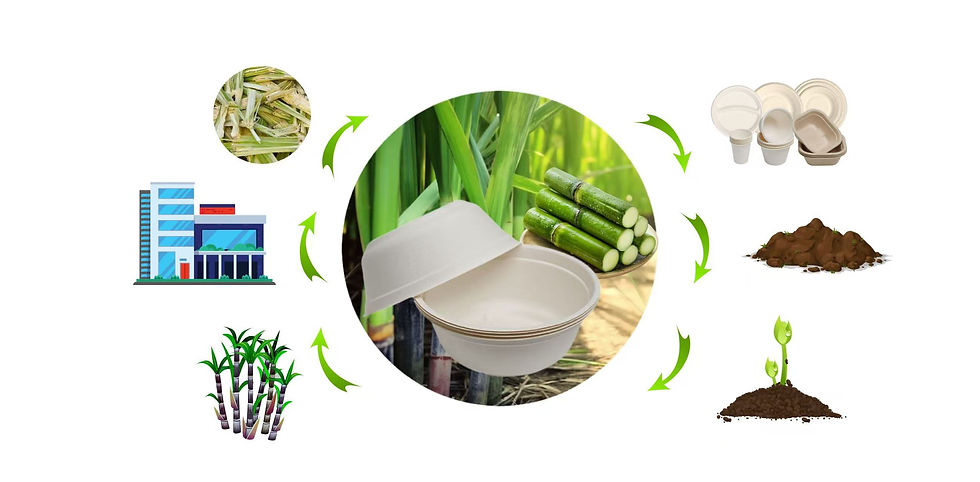
1. It Reduces Agricultural Waste
Sugarcane is harvested globally in massive volumes. Using bagasse gives this byproduct a second life instead of sending it to landfills or incineration.
2. It Replaces Plastic Without Performance Loss
Bagasse tableware is:
Rigid and sturdy
Heat-resistant
Suitable for oily and wet foods
This makes it ideal for takeaway meals, food delivery, and large-scale catering.
Is Sugarcane Bagasse Biodegradable or Compostable?
This is where confusion often starts.
Biodegradable vs Compostable (Simple Explanation)
Biodegradable: Breaks down naturally over time (timeline may be unclear)
Compostable: Breaks down into non-toxic organic matter within a defined period under composting conditions
Is Sugarcane Bagasse Compostable or Biodegradable?
High-quality sugarcane bagasse tableware is:
Industrial compostable
Home compostable in many conditions
Free from microplastic residue
Unlike many “biodegradable plastics,” bagasse does not leave behind synthetic fragments.
Bagasse vs Biodegradable Plastic: The Key Difference
Many blogs stop at definitions. What they don’t explain is why biodegradable plastic often underperforms in real life.
Feature | Sugarcane Bagasse | Biodegradable Plastic |
Raw material | Agricultural waste | Petroleum + additives |
Compost outcome | Organic matter | Often microplastics |
Heat resistance | High | Medium / low |
Consumer trust | High | Increasing skepticism |
Plastic-free | Yes | No |
This is why many composting facilities reject biodegradable plastics—but accept bagasse.

Common Uses of Sugarcane Bagasse Tableware
Bagasse products are common in many industries. They are popular with:
1.Restaurants and cafés
2.Catering companies and food trucks
3.Takeaway and delivery services
4.Schools, hospitals, and corporate kitchens
5.Brands that want sustainable packaging
These businesses often use:
1.Plates
2.Bowls
4.Trays
5.Cutlery
Bagasse items are strong, lightweight, and reliable. They are also affordable in bulk.

Key Benefits of Sugarcane Bagasse Food Packaging
Heat & Grease Resistance
Bagasse containers can handle hot meals, sauces, and oils without deforming.
Microwave & Freezer Safe
Suitable for reheating and cold storage—critical for food delivery operations.
Natural Appearance
Its matte, fiber texture visually communicates sustainability to customers—something plastic cannot replicate.
Why Foodservice Brands Are Switching to Bagasse
Restaurants and distributors are choosing bagasse not just for sustainability—but for operational reliability.
Bagasse products:
Stack efficiently
Seal well in clamshell formats
Maintain shape during transport
For schools, airlines, cafeterias, and takeaway chains, this balance of performance + responsibility matters more than marketing labels.
The Role of Bagasse in Global Plastic Regulations
Many regions now restrict:
Single-use plastics
Plastic-coated paper
Oxo-degradable materials
Bagasse packaging aligns well with:
EU SUP Directive goals
Australia’s compostability standards
Growing bans on plastic food containers worldwide
This regulatory compatibility reduces long-term compliance risk for brands.
Why MANA ECO Focuses on Sugarcane Bagasse
At MANA ECO, sugarcane bagasse is not a trend—it’s a material strategy.
Mold precision
Fiber density
Product durability
Our bagasse tableware is designed for real foodservice conditions, not just lab testing.
From clamshells to trays and lids, every product balances:
Compostability
Strength
Consistent quality at scale
FAQ: Sugarcane Bagasse Food Packaging
Is sugarcane bagasse safe for food contact?
Yes. Certified bagasse tableware is food-safe and free from harmful chemicals.
Can bagasse products be composted at home?
Many can, depending on thickness and local composting conditions.
Does bagasse contain plastic?
No. True bagasse products are plastic-free.
How long does bagasse take to decompose?
Typically 60–90 days in industrial composting conditions.
Is bagasse better than paper?
For food packaging, yes—bagasse is stronger and requires fewer chemical treatments.
Is bagasse suitable for frozen food?
Yes, bagasse food containers can be used for frozen food, as they maintain structural integrity at low temperatures.
Does bagasse absorb odors?
Bagasse has low odor absorption when properly processed, making it suitable for storing most foods without flavor transfer.
Is bagasse accepted by composting facilities globally?
Bagasse is widely accepted by industrial composting facilities, though acceptance may vary by region and local regulations.
Conclusion: Why Sugarcane Bagasse Is More Than a Trend
Sugarcane bagasse represents a practical shift in how disposable packaging is made—turning waste into value without sacrificing performance.
As regulations tighten and consumers demand transparency, materials that work in the real world will win. Bagasse is one of them.
For foodservice brands seeking reliability, sustainability, and scalability, sugarcane bagasse is no longer an alternative—it’s becoming the standard.
Get in Touch for Quote and free Samples


Comments