
EU Packaging Regulations 2030: What It Means for Disposable Food Packaging

In recent years, the European Union has taken some of the most aggressive steps in the world to reduce packaging waste. The new EU Packaging and Packaging Waste Regulation (PPWR) is expected to significantly reshape the global food packaging industry over the next decade.
For businesses involved in disposable food packaging—especially manufacturers, importers, and restaurant suppliers—understanding these regulatory changes is becoming increasingly important.
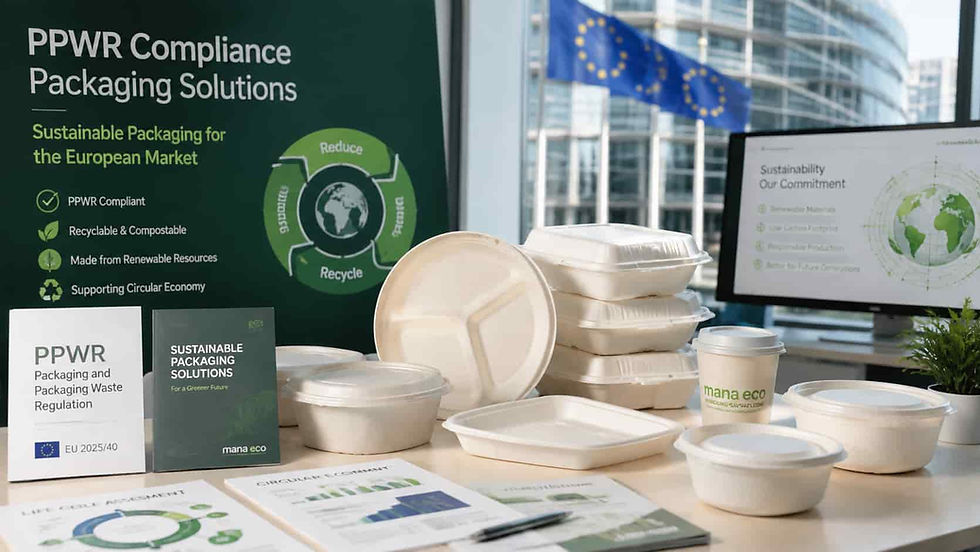
The policies are not only changing the way packaging is designed and recycled, but they are also accelerating the transition toward sustainable materials such as molded fiber packaging made from sugarcane bagasse,that is the future of disposable tableware materials.

Why the EU Is Strengthening Packaging Regulations
Packaging waste represents a major environmental challenge across Europe. According to EU data, packaging accounts for a large share of municipal waste, with plastic packaging being one of the fastest-growing sources.
The European Commission has therefore introduced stricter regulations with three main goals:
reduce overall packaging waste
increase recycling rates
promote reusable or compostable materials
The new framework aims to shift the packaging industry toward a circular economy, where materials are reused or recycled instead of discarded.
Key Targets of the EU Packaging Regulation
The upcoming regulation includes several important targets that will affect food packaging manufacturers and distributors.
Reduction of Packaging Waste
EU countries are required to gradually reduce packaging waste levels over the coming years. This creates strong incentives for businesses to adopt more efficient packaging materials.
Higher Recycling Requirements
New rules require higher recycling rates for packaging materials, especially plastics. Companies that rely heavily on plastic packaging may face increased compliance costs.
Restrictions on Certain Single-Use Packaging
Some types of single-use packaging used in restaurants and takeaway services may face stricter limitations.
These changes are encouraging foodservice companies to look for alternative materials that meet environmental goals while maintaining functionality.
Impact on the Foodservice Industry
Restaurants, catering companies, and takeaway businesses are among the sectors most affected by these new policies.
Many disposable food packaging products—such as plates, food containers, and cutlery—are directly targeted by plastic reduction initiatives.
As a result, distributors supplying foodservice packaging in Europe are increasingly sourcing alternative materials such as:
molded fiber packaging
paper-based containers
compostable packaging materials
The shift is already visible in many European cities where restaurants are gradually replacing plastic containers with plant-fiber alternatives.
Why Bagasse Packaging Fits EU Sustainability Goals
Sugarcane bagasse packaging has gained significant attention as an alternative to plastic tableware.
How bagasse tableware is manufactured? Bagasse is the fibrous residue left after sugarcane juice extraction. Instead of being treated as waste, it can be processed into molded fiber products such as plates, bowls, and takeaway containers.
Several characteristics make bagasse particularly compatible with European sustainability goals:
made from renewable agricultural residue
suitable for hot and cold foods
strong and durable for foodservice use
compostable under appropriate conditions
Because the material originates from plant fiber, it aligns with the EU’s broader strategy of reducing reliance on fossil-based packaging materials.
Manufacturers such as MANA ECO are expanding production capacity to supply molded fiber packaging to distributors across global markets.

How the Global Packaging Market May Change
Although these regulations are focused on Europe, their impact is global.
Many international brands prefer to standardize packaging across different markets. When Europe adopts stricter rules, companies often adjust their global packaging strategies accordingly.
For manufacturers and exporters of sustainable tableware, this shift may create new opportunities in markets where businesses are actively preparing for future regulations.
FAQ
What is the EU Packaging and Packaging Waste Regulation (PPWR)?
The EU Packaging and Packaging Waste Regulation is a new legislative framework designed to reduce packaging waste across Europe. The regulation aims to increase recycling rates, promote reusable packaging systems, and encourage the use of sustainable materials.
Will the EU ban plastic food packaging?
The EU is not banning all plastic packaging, but certain single-use plastic products are being restricted under regulations such as the Single-Use Plastics Directive. Businesses are encouraged to adopt recyclable or compostable alternatives.
Why are companies switching to bagasse food packaging?
Bagasse packaging is made from sugarcane fiber, an agricultural byproduct. It is renewable, durable, and suitable for hot food applications, making it a practical alternative to traditional plastic containers.
Is bagasse packaging accepted in the European market?
Yes. Many distributors and foodservice companies in Europe are increasingly sourcing bagasse tableware because it aligns with sustainability goals and plastic reduction initiatives.
Conclusion
The EU Packaging Regulation represents a major step toward reducing packaging waste and promoting sustainable materials.
While these policies create challenges for companies that rely on traditional plastic packaging, they also open the door for innovation in alternative materials.
As regulatory pressure continues to increase, plant-fiber packaging made from agricultural residues such as sugarcane bagasse is likely to play a growing role in the future of disposable food packaging.
Get in Touch for Quote and free Samples



Comments