
What Is the Sugarcane Plant? Why It’s Not a Fruit or Vegetable

Sugarcane is often misunderstood. Because it tastes sweet and is consumed in many parts of the world, some people wonder whether it should be classified as a fruit or a vegetable. Scientifically, however, sugarcane is neither. It belongs to a completely different category of plants and has important uses throughout agriculture and industry, especially in sustainable materials like compostable packaging.

Introduction
When we think of plant foods, we usually think of fruits or vegetables. But sugarcane doesn’t fit neatly into either category. It is a tall, fibrous grass grown primarily for its sucrose content rather than for seeds or edible leaves. Understanding what sugarcane truly is can help us appreciate not only what it is eaten for, but also how its byproducts—like bagasse—are transforming sustainable materials like compostable tableware.
Botanical Classification of Sugarcane
To understand sugarcane’s place in nature, it helps to look at how botanists classify plants.
Why Sugarcane Is Not a Fruit
In botanical terms, a fruit is the mature ovary of a flowering plant that typically contains seeds. Sugarcane does not develop from a flower’s ovary, and the part consumed—the stalk—does not contain seeds as fruits do. Therefore, it cannot be classified as a fruit.
Why Sugarcane Is Not a Vegetable
Vegetables are defined as edible parts of plants such as leaves, stems, bulbs, roots, or buds that humans eat for nutritional value. While sugarcane does have an edible stalk, it isn’t grown or consumed in this way for nutrients like traditional vegetables, and its primary purpose is sugar extraction, not nutrition.
Sugarcane as a Grass Crop
Botanically, sugarcane belongs to the Poaceae family, a group of perennial grasses that includes major crops such as maize, wheat, and rice. Its classification as a sugar crop reflects its agricultural use rather than its culinary identity.
How Sugarcane Is Used Beyond Sugar
Sugarcane’s importance goes far beyond sweetening our drinks.
Sugar Production and Biofuels
The most common use of sugarcane is to produce sucrose for food and beverages. It is also processed into ethanol—a biofuel used in many countries to reduce reliance on fossil fuels.
Bagasse: The Hidden Value
After juice is extracted from sugarcane stalks, the fibrous residue left behind is called bagasse. This material has become increasingly important as a sustainable raw material in multiple industries, from bioenergy to biodegradable packaging.
Nutritional and Economic Impacts
While raw sugarcane juice contains carbohydrates and a small amount of vitamins and minerals, its role in global food and energy systems is primarily economic. Countries like Brazil, India, and China rely on sugarcane for agricultural income and industrial growth.
From Plant to Packaging: Bagasse in Eco Products
The sustainable potential of sugarcane is most evident through bagasse.
Bagasse is the fibrous byproduct of sugarcane juice extraction, traditionally treated as waste. However, modern technology molds bagasse fiber into durable, compostable products like plates, trays, and containers that replace petroleum-based plastics.

Benefits of Bagasse in Compostable Tableware
Bagasse tableware is:
Plastic-free and PFAS-free
Industrial compostable
Heat- and moisture-resistant
Suitable for food contact
These properties make bagasse an ideal material for disposable tableware that supports sustainability goals without sacrificing performance.
MANA-ECO Bagasse Products
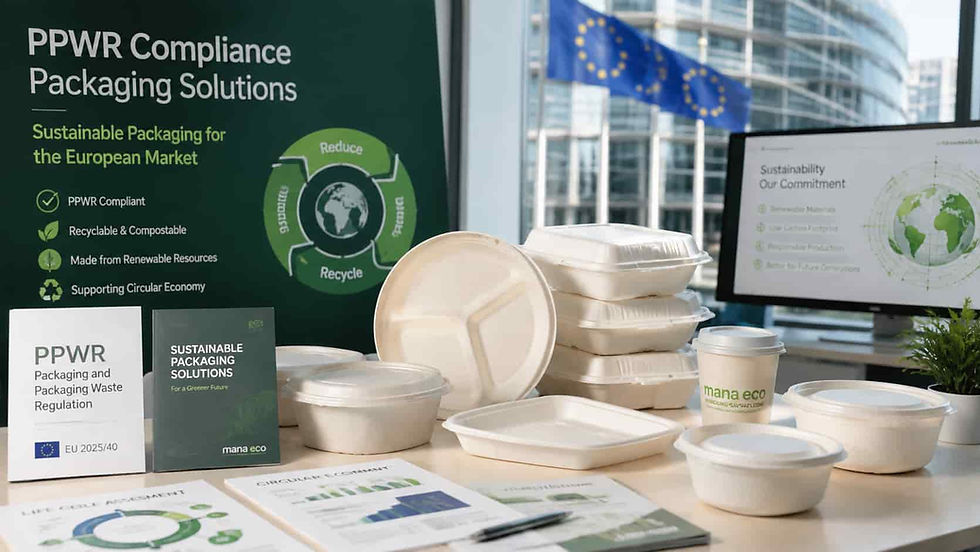
At MANA-ECO, bagasse is transformed into high-quality compostable tableware designed for modern foodservice and delivery environments. Our products, including plates, clamshells, trays, and bowls, are engineered to handle hot, wet, and oily meals while remaining fully compostable after use.
MANA ECO is a compostable tableware manufacturer-focused brand specializing in sugarcane bagasse compostable food packaging. We provide plastic-free molded fiber tableware with consistent quality, certified compliance, and scalable B2B supply for global foodservice markets.
Sugarcane and Sustainability
Renewable Crop Advantages
Sugarcane is a renewable crop that absorbs carbon dioxide as it grows. Using sugarcane and its byproducts like bagasse reduces dependence on fossil fuels and supports circular material flows in sustainable industries.
Reducing Waste with Bagasse Applications
Instead of discarding bagasse as agricultural waste, converting it into usable materials prevents burning and landfill buildup while creating value-added products.
Frequently Asked Questions
Q1: Why isn’t sugarcane considered a fruit?
A: Sugarcane doesn’t develop from the flower’s ovary and lacks seeds in its edible part, so botanically it is not a fruit.
Q2: What part of sugarcane is eaten?
A: The stalk is used for juice extraction and sweetening.
Q3: What is bagasse used for?
A: Bagasse is used in bioenergy, paper products, and compostable packaging like plates and containers.
Q4: Is sugarcane juice healthy?
A: It provides energy and small amounts of vitamins, but it is high in sugar and best consumed in moderation.
Conclusion
Sugarcane is not a fruit or a vegetable—it is a tall grass grown for its sugary stalk. Its uses span from traditional sugar and biofuel production to innovative applications like biodegradable packaging. As sustainability becomes central in industries from agriculture to foodservice, understanding the versatile roles of sugarcane helps us appreciate how nature’s design can inspire modern solutions.
For brands and consumers alike, materials like bagasse demonstrate how agricultural byproducts can be turned into high-performance, eco-friendly alternatives to plastic.



Comments