
Wet Press vs Dry Press Bagasse Tableware: Which Is Better for Buyers?

Introduction: Understanding Molded Fiber Manufacturing Technologies

As global demand for compostable food packaging grows, molded fiber manufacturing technologies are becoming increasingly important for buyers, importers, and foodservice brands.
Among bagasse tableware manufacturers, two primary production technologies dominate the market:
Wet press molded fiber
Dry press molded fiber
Both methods use renewable agricultural fibers such as sugarcane bagasse to produce:
Compostable plates
Bowls
Clamshell containers
Food trays
Takeaway packaging
However, wet press and dry press products differ significantly in:
Appearance
Surface quality
Structural performance
Production cost
Market positioning
For buyers, understanding these differences is critical when selecting products for:
Restaurant chains
Retail packaging
Food delivery
Premium takeaway packaging
Budget foodservice operations
In this guide, we will compare:
Wet press vs dry press manufacturing
Product appearance and quality
Cost differences
Durability performance
Market applications
Sustainability considerations
Buyer sourcing strategies
Understanding these factors can help importers choose the right molded fiber packaging solutions for their target markets.
What Is Wet Press Bagasse Tableware?
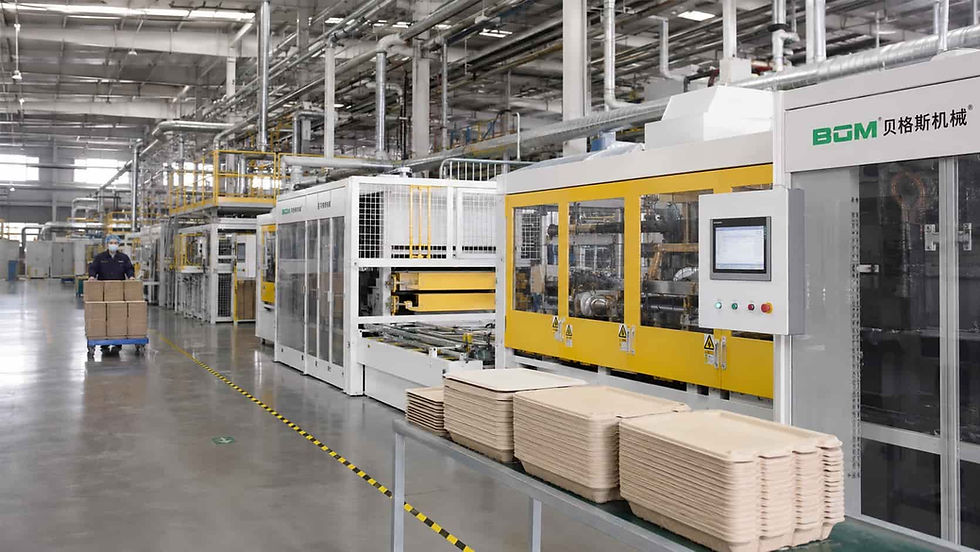
Wet press molded fiber packaging is manufactured using high-pressure forming and drying systems.
This process creates:
Smooth surfaces
Precise product shapes
Higher rigidity
Premium appearance
Wet press products are commonly used for:
High-end takeaway packaging
Retail food packaging
Restaurant presentation packaging
Premium sustainable foodservice brands
Characteristics of Wet Press Products
Wet press products usually offer:
Smooth and refined surfaces
Better dimensional consistency
Improved stacking performance
Enhanced product appearance
Many buyers prefer wet press products because they resemble higher-end paper packaging or plastic alternatives.
What Is Dry Press Bagasse Tableware?
Dry press molded fiber products are manufactured using simpler production systems with lower molding pressure.
These products generally have:
Rougher surfaces
More visible fiber texture
Lower production costs
Dry press packaging is commonly used for:
Budget foodservice operations
School meal programs
Large-volume takeaway businesses
Cost-sensitive markets
Characteristics of Dry Press Products
Dry press products typically feature:
Lower manufacturing cost
More natural fiber appearance
Less refined surface texture
Basic functional performance
Although appearance may be less premium, dry press products remain widely used because of their affordability.
Manufacturing Process Comparison
The manufacturing process directly affects product quality and market positioning.
Wet Press Manufacturing Process
Wet press systems generally involve:
Fiber pulping
Precision vacuum forming
High-pressure hot pressing
Surface finishing
Quality inspection
This process improves:
Surface smoothness
Structural density
Dimensional consistency
Dry Press Manufacturing Process
Dry press systems typically involve:
Fiber pulping
Basic molding
Drying systems
Trimming and packaging
Compared with wet press systems, dry press production:
Uses lower pressure
Requires less automation
Has lower equipment investment
Surface Quality Comparison

One of the biggest differences between wet press and dry press products is surface appearance.
Wet Press Surface Quality
Wet press products usually have:
Smoother surfaces
Cleaner edges
Better visual consistency
More premium appearance
These products are often selected for:
Branded foodservice operations
Retail presentation
Premium takeaway packaging
Dry Press Surface Quality
Dry press products often display:
Visible fiber texture
Rougher surfaces
More natural appearance
Some buyers actually prefer this appearance because it highlights the eco-friendly material identity.
Structural Strength and Durability
Structural performance is another important consideration for buyers.
Wet Press Strength Advantages
Wet press products generally offer:
Better rigidity
Higher density
Improved lid fitting
Stronger stacking performance
This makes them suitable for:
Food delivery
Hot meals
Heavy food applications
Dry Press Strength Considerations
Dry press products may provide:
Sufficient basic functionality
Lower structural density
Less premium rigidity
However, they remain suitable for many standard foodservice applications.
Cost Comparison
Cost differences are one of the most important factors for buyers.
Why Wet Press Costs More
Wet press production usually requires:
Higher automation investment
More advanced equipment
Additional finishing systems
Higher energy consumption
As a result, wet press products are generally more expensive.
Why Dry Press Is More Affordable
Dry press systems typically:
Require lower equipment investment
Use simpler manufacturing systems
Offer lower production costs
This makes dry press products attractive for:
Price-sensitive buyers
High-volume procurement
Institutional foodservice
Sustainability Considerations
Both wet press and dry press products use renewable bagasse fiber materials.
Both product types can be:
Compostable
Plastic-free
Renewable
Sustainable alternatives to plastic packaging
However, sustainability performance may also depend on:
Energy efficiency
Water usage
Manufacturing technology
PFAS-free compliance
Which Type Is Better for Buyers?
There is no single answer for all markets.
The best option depends on:
Brand positioning
Budget
Product application
Consumer expectations
Wet Press Is Better For:
Premium restaurant brands
Retail-ready packaging
Food delivery presentation
High-end sustainable packaging
Dry Press Is Better For:
Budget operations
High-volume takeaway businesses
Institutional catering
Cost-sensitive markets
Future Trends in Molded Fiber Packaging

Global packaging trends increasingly favor:
Higher product quality
Better presentation
Sustainable materials
PFAS-free compliance
As consumer expectations increase, wet press molded fiber packaging may continue gaining market share in premium applications.
However, dry press products will likely remain important for large-scale affordable foodservice packaging.
Common Buyer Mistakes When Comparing Wet Press and Dry Press
Focusing Only on Pricing
Lower-cost products may not match brand positioning requirements.
Ignoring Product Presentation
Packaging appearance increasingly affects customer experience and brand perception.
Not Testing Products in Real Applications
Buyers should test products using:
Hot foods
Oily foods
Delivery conditions
Stacking environments
Conclusion: Choosing the Right Molded Fiber Technology Depends on Market Positioning
Both wet press and dry press bagasse tableware offer important advantages for sustainable food packaging buyers.
Wet press products provide:
Premium appearance
Better rigidity
Higher-quality presentation
Dry press products provide:
Lower cost
Functional performance
Efficient large-volume production
For buyers, the best sourcing decision depends on:
Brand positioning
Budget requirements
Consumer expectations
Operational needs
As sustainable packaging markets continue evolving, understanding molded fiber manufacturing technologies will become increasingly important for long-term procurement success.
FAQ About Wet Press vs Dry Press Bagasse Tableware
1. What is wet press bagasse tableware?
Wet press products are molded fiber packaging products manufactured using high-pressure forming and finishing systems.
2. What is dry press molded fiber packaging?
Dry press products use simpler molding systems with lower pressure and rougher surface texture.
3. Which type has better appearance?
Wet press products generally have smoother surfaces and more premium appearance.
4. Which type is more affordable?
Dry press products are usually lower cost because they require simpler manufacturing systems.
5. Which type is better for food delivery?
Wet press products often perform better for delivery because of stronger rigidity and stacking performance.
6. Are both types compostable?
Yes, both wet press and dry press products can be compostable and plastic-free.
7. Why do some buyers prefer dry press appearance?
Some buyers prefer the visible fiber texture because it emphasizes sustainability and natural materials.
8. Which type is better for premium restaurant brands?
Wet press products are usually preferred for premium foodservice presentation.
9. How should buyers compare products?
Buyers should evaluate appearance, rigidity, leakage resistance, stacking performance, and cost.
10. What future trends may affect molded fiber packaging?
Future trends include PFAS-free compliance, higher presentation standards, and growing demand for premium sustainable packaging.
If you are serious about sourcing eco-friendly food packaging:
👉 Don’t rely on guesswork.
We can help you:
Verify product quality
Provide certified samples
Offer stable long-term supply
Email: abel@mana-eco.com WhatsApp: +86 13867471335


Comments