
How to Choose a Reliable Compostable Tableware Supplier in China

Introduction: Why Choosing the Right Compostable Tableware Supplier Matters
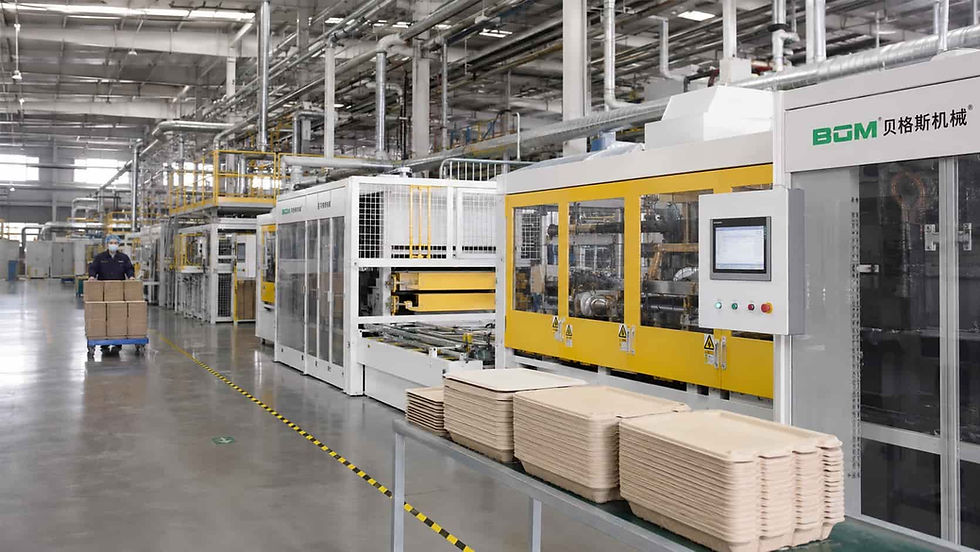
As global demand for sustainable food packaging continues to grow, more importers, wholesalers, restaurant chains, and foodservice distributors are searching for reliable compostable tableware suppliers in China.
China has become one of the world’s largest manufacturing centers for:
Bagasse tableware
Compostable food containers
Biodegradable takeaway packaging
Molded fiber food packaging
Sustainable disposable tableware
However, not all suppliers offer the same level of:
Product quality
Manufacturing capability
Compliance standards
Export experience
Supply chain reliability
For international buyers, selecting the wrong supplier can create serious business risks, including:
Product quality issues
Shipping delays
Certification problems
PFAS compliance failures
Unstable lead times
Customer complaints
Increased procurement costs
Today, choosing a compostable tableware supplier is no longer simply about finding the lowest price.
Professional buyers increasingly evaluate suppliers based on:
Manufacturing expertise
Quality control systems
Food-contact compliance
Export capability
Long-term stability
Sustainability practices
In this guide, we will explain:
How to evaluate compostable tableware suppliers in China
Key supplier qualification standards
Common sourcing mistakes
Important certifications buyers should verify
Manufacturing capabilities importers should inspect
PFAS-free compliance requirements
Supply chain considerations
Questions buyers should ask before placing orders
For importers and distributors, understanding these factors can significantly reduce sourcing risks and improve long-term procurement success.
Why China Dominates the Compostable Tableware Industry
China has become one of the leading global suppliers of compostable food packaging products.
Several factors contribute to this dominance.
Large-Scale Manufacturing Infrastructure
China has extensive manufacturing capacity for:
Molded fiber packaging
Bagasse tableware
Paper food containers
Compostable takeaway packaging
Large production clusters help suppliers achieve:
Higher efficiency
Lower manufacturing costs
Faster production scalability
Strong Raw Material Supply Chains
China has access to large quantities of:
Sugarcane bagasse
Bamboo fiber
Recycled pulp
Agricultural fiber materials
This supports stable large-scale production of compostable packaging products.
Mature Export Experience
Many Chinese compostable tableware manufacturers have years of export experience serving:
North America
Europe
Australia
Southeast Asia
Middle Eastern markets
Experienced exporters understand:
Food-contact regulations
Certification requirements
Shipping documentation
International packaging standards
The Biggest Risks When Choosing Compostable Tableware Suppliers
Many buyers focus too heavily on pricing during supplier selection.
However, low pricing can sometimes indicate:
Weak quality control
Inconsistent materials
Poor manufacturing stability
Limited export experience
Common sourcing risks include:
Inconsistent Product Quality
Low-quality suppliers may produce products with:
Uneven thickness
Cracking issues
Lid fitting problems
Leakage risks
Poor heat resistance
These issues can damage buyer reputation and increase customer complaints.
Fake or Incomplete Certifications
Some suppliers provide:
Expired certificates
Irrelevant test reports
Unverified compliance claims
Buyers should always verify:
FDA compliance
BPI certification
OK Compost certification
PFAS-free testing reports
Unstable Production Capacity
Small factories may struggle during:
Peak seasons
Large-volume orders
Shipping disruptions
This can result in:
Delayed deliveries
Inconsistent lead times
Inventory shortages
Weak Communication
Communication delays can become serious problems during:
Production adjustments
Shipping coordination
Quality claims
Customs clearance
Professional suppliers should maintain responsive communication systems.
How to Evaluate a Compostable Tableware Supplier
Professional buyers usually evaluate suppliers using several key criteria.
1. Manufacturing Capability
Manufacturing capability is one of the most important evaluation factors.
Buyers should verify:
Factory scale
Production line quantity
Automation level
Daily output capacity
Equipment condition
Reliable manufacturers often invest heavily in:
Automated molding systems
Precision trimming equipment
Quality inspection systems
Modern drying technology
Wet Press vs Dry Press Production
Buyers should also understand whether suppliers specialize in:
Wet press molded fiber
Dry press molded fiber
Wet press products generally offer:
Smoother surface quality
Better appearance
Higher rigidity
Premium positioning
Dry press products are usually:
Lower cost
Rougher texture
More suitable for budget markets
Understanding these differences helps buyers choose products that match their market positioning.
2. Quality Control Systems
Professional compostable tableware manufacturers should maintain strong quality control systems.
Key inspection areas include:
Raw material testing
Product thickness consistency
Leak resistance testing
Heat resistance testing
Drop testing
Packaging inspection
Reliable factories often perform:
Multiple in-line inspections
Final batch testing
Random quality sampling
3. Certification Verification
Certifications are critical in international food packaging procurement.
Important certifications may include:
OK Compost certification
EN13432 compliance
PFAS-free testing reports
Buyers should:
Verify certificate validity dates
Confirm testing laboratories
Check product scope coverage
4. PFAS-Free Compliance

PFAS-free packaging has become increasingly important globally.
Many international buyers now require:
Fluorine-free molded fiber
PFAS-free food containers
Third-party PFAS testing
Suppliers should provide:
PFAS-free declarations
Laboratory testing reports
Regulatory compliance documentation
5. Export Experience
Export experience significantly affects procurement reliability.
Experienced suppliers usually understand:
International labeling standards
Carton marking requirements
Pallet loading optimization
Shipping documentation
Customs clearance procedures
This reduces shipping risks and improves delivery efficiency.
6. Supply Chain Stability
Stable supply chains are critical for long-term cooperation.
Buyers should evaluate:
Raw material sourcing
Production scheduling
Lead time consistency
Inventory planning
Logistics coordination
Reliable suppliers usually maintain:
Long-term raw material partnerships
Backup production capacity
Stable export logistics systems
Questions Buyers Should Ask Before Choosing a Supplier
Professional buyers often ask suppliers detailed sourcing questions.
Examples include:
Manufacturing Questions
What is your monthly production capacity?
How many production lines do you operate?
Do you produce wet press or dry press products?
What quality inspection systems do you use?
Compliance Questions
Are your products PFAS-free?
Can you provide FDA and BPI documentation?
Which laboratories perform your testing?
Export Questions
Which countries do you export to?
What are your standard lead times?
Can you support OEM packaging?
Supply Chain Questions
How do you manage raw material stability?
What happens during peak season demand?
How do you handle shipping disruptions?
Why Long-Term Supplier Partnerships Matter
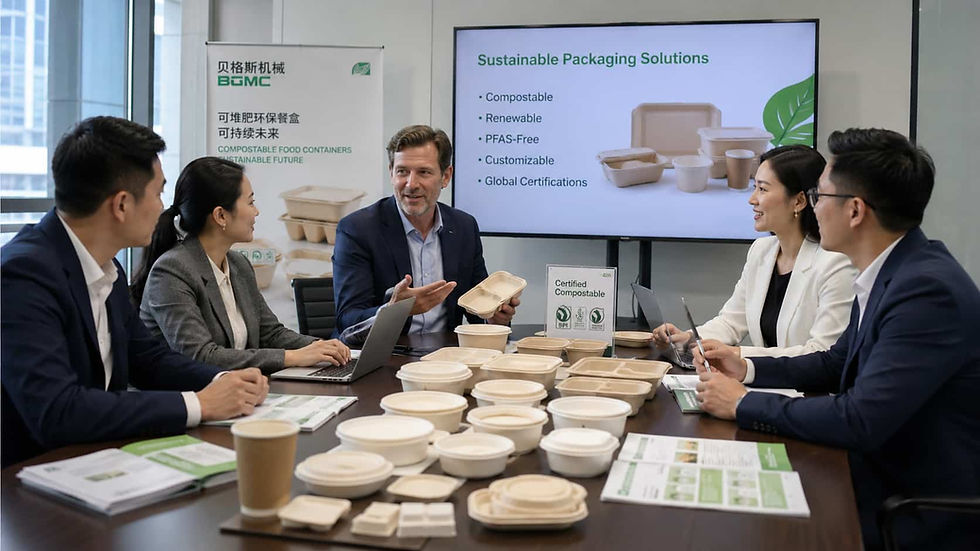
Experienced importers increasingly prioritize long-term partnerships over short-term price advantages.
Reliable supplier partnerships help improve:
Product consistency
Communication efficiency
Inventory planning
Cost stability
Production coordination
Long-term cooperation also allows manufacturers to better understand buyer requirements and market preferences.
Future Trends in Compostable Tableware Supplier Selection
Global buyers are becoming more sophisticated when evaluating suppliers.
Future supplier selection trends will increasingly focus on:
PFAS-free compliance
Automated manufacturing
Supply chain stability
Carbon reduction initiatives
Smart manufacturing systems
Manufacturers that invest in long-term sustainability and operational reliability will likely gain stronger competitive advantages.
Conclusion: Choosing the Right Supplier Is a Long-Term Business Decision
Choosing a reliable compostable tableware supplier in China is one of the most important decisions for importers and distributors in the sustainable packaging industry.
Today, buyers must evaluate suppliers based on more than just pricing.
Reliable suppliers should demonstrate:
Stable manufacturing capability
Strong quality control systems
Export experience
PFAS-free compliance
Supply chain reliability
Long-term partnership capability
As global demand for compostable food packaging continues growing, working with experienced and professional manufacturers will become increasingly important for procurement success.
For buyers, selecting the right supplier helps reduce sourcing risks, improve product consistency, and support long-term business growth.
FAQ About Choosing Compostable Tableware Suppliers
1. Why is China a major supplier of compostable tableware?
China has large-scale manufacturing infrastructure, strong raw material supply chains, and extensive export experience.
2. What certifications should buyers verify?
Common certifications include FDA, BPI, OK Compost, EN13432, and PFAS-free testing reports.
3. Why is PFAS-free compliance important?
Many governments are strengthening restrictions on PFAS chemicals in food packaging products.
4. What are common quality problems in low-cost compostable packaging?
Common issues include leakage, cracking, poor lid fitting, and inconsistent thickness.
5. What is the difference between wet press and dry press products?
Wet press products have smoother surfaces and premium appearance, while dry press products are lower cost with rougher textures.
6. Why is export experience important?
Experienced exporters better understand international regulations, documentation, and shipping requirements.
7. How can buyers verify supplier manufacturing capability?
Buyers can evaluate factory scale, production lines, automation systems, and quality inspection processes.
8. Why are long-term supplier partnerships important?
Long-term cooperation improves communication, product consistency, and supply chain stability.
9. What future trends will affect supplier selection?
PFAS-free compliance, automation, ESG transparency, and supply chain stability will become increasingly important.
10. What should buyers prioritize besides pricing?
Buyers should prioritize quality consistency, compliance capability, export experience, and supply chain reliability.
If you are serious about sourcing eco-friendly food packaging:
👉 Don’t rely on guesswork.
We can help you:
Verify product quality
Provide certified samples
Offer stable long-term supply
Email: abel@mana-eco.com WhatsApp: +86 13867471335


Comments