
Global Plastic Ban Policies Driving Demand for Bagasse Packaging

Updated: Mar 16
Over the past decade, governments around the world have introduced stricter regulations on single-use plastics. Environmental concerns, marine pollution, and waste management challenges have pushed policymakers to accelerate the transition toward sustainable packaging materials.
As plastic restrictions expand across major markets, businesses in the foodservice industry are actively searching for alternatives that can meet regulatory requirements while maintaining product performance.
Among the available options, sugarcane bagasse tableware has emerged as one of the most practical and scalable solutions. Made from agricultural byproducts, molded fiber packaging is increasingly used by restaurants, food delivery services, and packaging distributors seeking compliant and environmentally responsible products.
Understanding how global plastic ban policies are shaping the packaging industry can help businesses prepare for future regulatory changes and market opportunities.

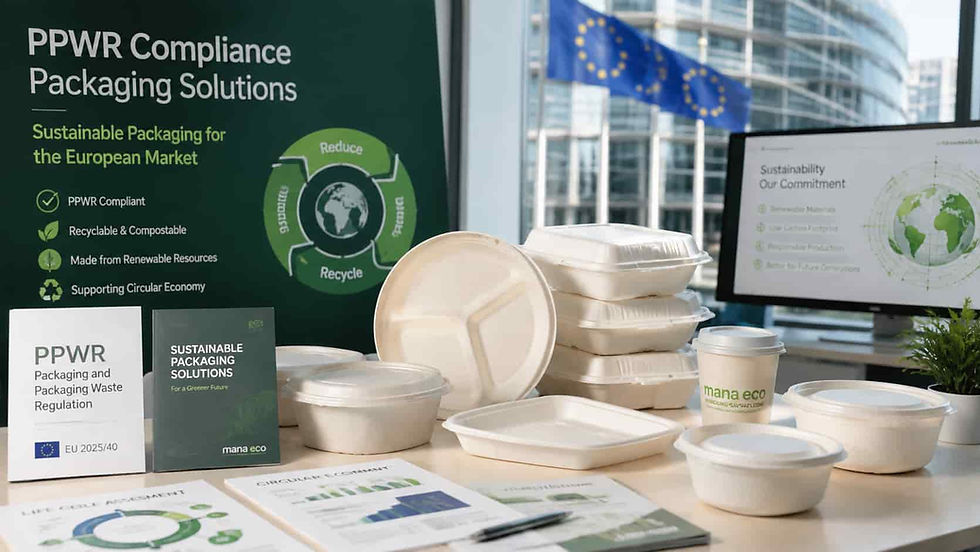
As more governments introduce plastic bans, foodservice businesses are increasingly searching for sustainable packaging alternatives such as bagasse tableware.
Why Governments Are Restricting Single-Use Plastics
Single-use plastics have been widely used in food packaging because they are inexpensive, lightweight, and durable. However, their long-term environmental impact has become a growing concern.
Plastic waste can take decades or even centuries to degrade in natural environments. A significant portion of global plastic waste eventually enters rivers and oceans, creating serious ecological problems.
To reduce plastic pollution and encourage sustainable materials, many governments have implemented policies such as:
bans on specific plastic products
plastic taxes or levies
recycling mandates
requirements for compostable or biodegradable packaging
These regulations are accelerating innovation in alternative packaging materials.

EU Single-Use Plastics Directive (SUP Directive)
The European Union has been one of the most active regions in regulating plastic packaging.
The Single-Use Plastics Directive (SUP Directive) was introduced to reduce the environmental impact of plastic waste across EU member states.
Key measures include:
banning certain disposable plastic products
promoting reusable or sustainable packaging
increasing producer responsibility for waste management
Items such as plastic cutlery, plates, straws, and certain food containers are restricted or heavily regulated under this directive.
As a result, many European foodservice businesses are shifting toward alternatives such as molded fiber packaging, paper-based materials, and compostable products.
Bagasse tableware has become particularly attractive in the European market because it combines sustainability with reliable foodservice performance.
Plastic Ban Policies in the United States
In the United States, plastic regulations are not uniform nationwide. Instead, many state and local governments have introduced their own restrictions.
Examples of policies include:
bans on foam food containers
restrictions on plastic straws and cutlery
requirements for recyclable or compostable packaging
States such as California and New York have implemented some of the most comprehensive plastic regulations in the country.
These policies are encouraging restaurants and food delivery businesses to adopt alternative materials that comply with environmental guidelines.
As sustainability becomes a stronger part of brand identity, many companies are also choosing eco-friendly packaging voluntarily, even in regions where regulations are less strict.
Growing Regulations Across Asia
Plastic regulations are also expanding rapidly in many Asian countries.
Governments across the region are introducing measures to reduce plastic waste and promote sustainable packaging practices.
Examples include:
phased bans on single-use plastic products
restrictions on foam containers
national plans to reduce plastic waste
support for biodegradable or compostable materials
Several countries are encouraging the use of agricultural fiber products as part of their waste reduction strategies.
Because sugarcane is widely produced in many parts of Asia, bagasse has become an important raw material for sustainable packaging manufacturing.
Region | Policy | Impact |
EU | SUP Directive | Ban on plastic cutlery and plates |
US | State-level plastic bans | Restrictions on foam containers |
Asia | Plastic reduction policies | Growing demand for eco packaging |
Why Bagasse Packaging Is Gaining Global Attention
Among the many alternatives to plastic packaging, bagasse tableware offers several advantages that align with new environmental regulations.
Another reason is the significant volatility in the PP and PET raw material markets. Recently, due to the situation in the Middle East, raw material prices have risen sharply.
Bagasse is the fibrous residue left after sugarcane juice extraction. Instead of being discarded, the fiber can be molded into durable food containers, plates, and bowls.
Key advantages include:
made from renewable agricultural waste
suitable for hot and cold foods
resistant to oil and moisture
compatible with large-scale manufacturing
Because bagasse products originate from plant fiber, they are widely considered a practical solution for businesses seeking to reduce plastic usage.
Manufacturers such as MANA ECO are helping expand global supply by producing molded fiber tableware designed for international foodservice markets.

Market Impact: The Rise of Compostable Tableware
As plastic restrictions expand, the global market for compostable food packaging continues to grow.
Restaurants, catering companies, and food delivery platforms are actively exploring packaging materials that meet environmental expectations while maintaining operational efficiency.
Bagasse tableware fits well within this shift because it provides a balance between sustainability and practicality.
Distributors in many regions are increasing imports of molded fiber products to meet the rising demand for plastic alternatives.
For manufacturers and suppliers, the transition away from single-use plastics represents both a challenge and an opportunity to innovate in sustainable packaging.
Conclusion
Government policies restricting single-use plastics are reshaping the global food packaging industry.
From Europe’s SUP Directive to regional regulations in the United States and Asia, businesses are under growing pressure to adopt environmentally responsible packaging solutions.
Among the available alternatives, sugarcane bagasse packaging has emerged as a practical option for foodservice operations seeking sustainable materials without sacrificing performance.
As environmental policies continue to evolve, demand for molded fiber tableware is expected to grow worldwide, creating new opportunities for suppliers and distributors across the packaging industry.
Frequently Asked Questions (FAQ)
What products are banned under plastic regulations?
Many regulations target single-use plastic items such as plastic cutlery, plates, straws, and foam food containers. Specific restrictions vary depending on the country or region.
What are the main alternatives to plastic food packaging?
Common alternatives include paper packaging, bamboo products, molded fiber tableware made from bagasse, and certain compostable bioplastics.
Is bagasse packaging compliant with plastic ban regulations?
Bagasse packaging is widely used as an alternative to plastic because it is made from plant fiber and can be compostable under suitable conditions.
Why are restaurants switching to compostable packaging?
Many restaurants are responding to both government regulations and consumer demand for sustainable products. Compostable packaging helps reduce plastic waste and supports environmental initiatives.
Get in Touch for Quote and free Samples



Comments