
Sustainable Airline Catering Packaging: Why Bagasse Tableware Is the Future of In-Flight Meals
- abel zhao
- 3 minutes ago
- 8 min read


Introduction

The aviation industry is experiencing a major transformation in how it approaches food service operations.
Every day, airlines serve millions of meals to passengers around the world. Behind every in-flight meal is a complex packaging system involving:
Meal trays
Food containers
Disposable tableware
Cups
Cutlery
Packaging accessories
For decades, traditional airline catering packaging has mainly focused on:
Lightweight design
Transportation efficiency
Food protection
Cost control
However, sustainability has become an increasingly important consideration for airlines and aviation catering companies.
As environmental goals, passenger expectations, and global sustainability initiatives continue to influence the aviation industry, companies are searching for alternatives that can reduce environmental impact while maintaining reliable performance.
This is where Sustainable Airline Catering Packaging is becoming an important industry trend.
Among different sustainable packaging solutions, bagasse tableware made from sugarcane fiber is gaining attention as a practical alternative for airline catering applications.
With renewable raw materials, compostable options, and strong food service performance, bagasse products provide airlines with a solution that supports sustainability goals without sacrificing functionality.
This article explores:
Why airlines are changing their packaging strategies;
The challenges of traditional airline catering packaging;
How bagasse tableware fits aviation food service requirements;
The benefits of sustainable airline catering packaging;
How airlines and catering companies can choose suitable packaging suppliers.
Why Sustainable Airline Catering Packaging Is Becoming Important
The aviation industry has always faced unique packaging challenges.
Unlike restaurants or takeaway businesses, airlines must consider additional factors:
Weight limitations;
Strict food safety requirements;
Large-scale purchasing;
International transportation;
Passenger experience.
A single airline may require hundreds of thousands or even millions of meal packaging units every month.
Therefore, packaging decisions have a significant impact on:
Waste generation;
Material consumption;
Operational efficiency;
Brand sustainability image.
Modern airlines are increasingly evaluating packaging based on its entire lifecycle:
Raw Material → Production → Transportation → Usage → Disposal
This shift has accelerated demand for Sustainable Airline Catering Packaging solutions.
The Challenges of Traditional Airline Catering Packaging
Traditional airline food packaging has commonly relied on materials such as:
Plastic trays;
Plastic containers;
Aluminum meal trays;
Coated paper products.
These materials have helped airlines achieve reliable food service performance for many years.
However, sustainability concerns are changing how these solutions are evaluated.
Plastic Packaging Challenges in Airline Catering
Plastic has traditionally been popular because it provides:
Excellent durability;
Moisture resistance;
Low production cost;
Easy transportation.
However, plastic packaging also creates several challenges:
Dependence on Fossil Resources
Most conventional plastic products are produced from petroleum-based materials.
This creates concerns regarding:
Resource consumption;
Carbon emissions;
Long-term sustainability.
Waste Management Difficulties
Airline catering generates large volumes of disposable packaging waste every day.
Because flights operate across different regions and countries, waste collection and recycling systems can be complicated.
Changing Passenger Expectations
Today’s travelers increasingly pay attention to environmental responsibility.
Airlines are expected to demonstrate sustainability not only through aircraft operations but also through daily passenger services.
Packaging has become part of the airline brand experience.
Why Sustainable Airline Catering Packaging Requires Better Material Solutions
Choosing sustainable packaging for airlines is not simply about replacing plastic.
The packaging must still meet strict operational requirements.
An ideal Sustainable Airline Catering Packaging solution should provide:
Food Safety
Airline meals require packaging materials suitable for food contact applications.
Packaging must support:
Safe food storage;
Reliable transportation;
International food service requirements.
Lightweight Performance
Aircraft operations are highly sensitive to weight.
Packaging materials need to balance:
Strength;
Protection;
Lightweight structure.
Reliable Food Protection
Airline meals may experience:
Long preparation periods;
Transportation between catering facilities and aircraft;
Temperature changes.
Therefore, packaging must maintain:
Structural integrity;
Leak resistance;
Food presentation quality.
Why Bagasse Tableware Is Suitable for Sustainable Airline Catering Packaging

Bagasse tableware is produced from sugarcane bagasse, the fibrous material remaining after sugarcane juice extraction.
Instead of becoming agricultural waste, bagasse can be processed into:
Meal trays;
Food containers;
Plates;
Bowls;
Disposable tableware.
For aviation catering, bagasse provides a balance between sustainability and practical performance.
Renewable Sugarcane Fiber Material
Unlike petroleum-based plastic packaging, bagasse comes from a renewable agricultural resource.
Sugarcane production generates large amounts of bagasse as a natural by-product.
Using this material helps create value from agricultural resources while supporting more sustainable packaging systems.
Compostable Packaging Option
One important advantage of bagasse tableware is its compatibility with compostable packaging solutions.
For airlines and catering companies focusing on sustainability goals, compostable materials provide an opportunity to reduce dependence on conventional disposable packaging.
Strong Performance for Airline Food Service
Sustainable packaging must still perform in demanding environments.
Bagasse tableware provides:
Heat Resistance
Suitable for:
Hot meals;
Ready-to-serve food;
Warm catering applications.
Oil Resistance
Suitable for:
Fried foods;
Sauced meals;
Mixed dishes.
Structural Strength
Bagasse containers maintain good rigidity during:
Meal preparation;
Transportation;
Passenger service.
Applications of Bagasse Tableware in Airline Catering

Airline catering operations include multiple food service scenarios, from short-distance flights to international long-haul routes.
Different meal services require packaging solutions that provide:
Reliable food protection;
Convenient handling;
Professional presentation;
Sustainable performance.
Because of these requirements, Sustainable Airline Catering Packaging solutions need to be flexible enough for different aviation food service applications.
Bagasse tableware can be used in various airline catering scenarios.
Bagasse Meal Trays for In-Flight Meals
Meal trays are one of the most important components of airline food service.
Traditional airline meal trays are often made from:
Plastic;
Aluminum;
Composite materials.
However, airlines are increasingly exploring renewable fiber alternatives.
Bagasse meal trays provide several advantages:
Suitable Structure for Complete Meal Sets
Airline meals often include:
Main dishes;
Side dishes;
Desserts;
Snacks.
Bagasse trays can be designed with multiple compartments to help organize different food items.
This improves:
Passenger convenience;
Food presentation;
Catering efficiency.
Suitable for Hot and Cold Food Applications
Airline meals may include different types of food:
Hot meals:
Rice dishes;
Pasta;
Meat dishes;
Vegetables.
Cold meals:
Salads;
Desserts;
Fruits.
Bagasse food packaging provides suitable performance for both hot and cold applications.
Bagasse Food Containers for Airline Catering
Besides meal trays, food containers are also widely used in aviation catering.
Common applications include:
Breakfast containers;
Snack boxes;
Special meal packaging;
Premium cabin food packaging.
For airlines offering different passenger classes, sustainable packaging can also support brand differentiation.
For example:
Business class and premium services often focus on:
Quality presentation;
Customer experience;
Sustainability image.
Using renewable fiber packaging can help airlines communicate environmental responsibility.
Compostable Tableware for Airport Catering Services
Sustainable packaging requirements are not limited to aircraft cabins.
Airports also operate:
Lounges;
Restaurants;
Catering facilities;
Food service areas.
These locations generate significant amounts of disposable packaging waste.
Bagasse tableware can be applied in:
Airport lounges;
VIP dining areas;
Airline-operated restaurants.
This creates a broader opportunity for Sustainable Airline Catering Packaging beyond in-flight meals.
Bagasse Tableware vs Traditional Airline Packaging
When airlines evaluate packaging solutions, they usually consider multiple factors:
Sustainability;
Performance;
Cost;
Supply reliability;
Passenger experience.
The comparison between bagasse packaging and traditional materials shows why renewable fiber solutions are gaining attention.
Feature | Bagasse Tableware | Plastic Packaging | Aluminum Packaging |
Raw material | Sugarcane fiber | Petroleum-based materials | Aluminum resources |
Renewable source | Yes | No | Limited |
Plastic-free option | Yes | No | Yes |
Lightweight | Yes | Yes | Moderate |
Compostable option | Available | Limited | No |
Sustainability positioning | High | Lower | Medium |
Food service application | Excellent | Excellent | Excellent |
Why Airlines Are Moving Toward Sustainable Airline Catering Packaging
The transition toward sustainable packaging is driven by several factors.
1. Meeting Corporate Sustainability Goals
Many airlines have established environmental targets related to:
Carbon reduction;
Waste reduction;
Sustainable operations.
Packaging is becoming an important part of these sustainability strategies.
Although packaging represents only one part of aviation sustainability, visible changes in passenger-facing products can demonstrate corporate commitment.
2. Improving Passenger Experience
Modern passengers increasingly notice the environmental impact of everyday products.
A meal served with sustainable packaging can reinforce an airline’s sustainability message.
For airlines, packaging is not only a functional item.
It is also part of:
Customer experience;
Brand communication;
Environmental reputation.
3. Preparing for Future Regulations
Governments and organizations worldwide are introducing stricter requirements for:
Single-use plastics;
Waste reduction;
Sustainable materials.
Airline catering companies need packaging solutions that can adapt to future market expectations.
Choosing Sustainable Airline Catering Packaging today can help companies prepare for future sustainability requirements.
How Airlines Should Choose Sustainable Airline Catering Packaging Suppliers
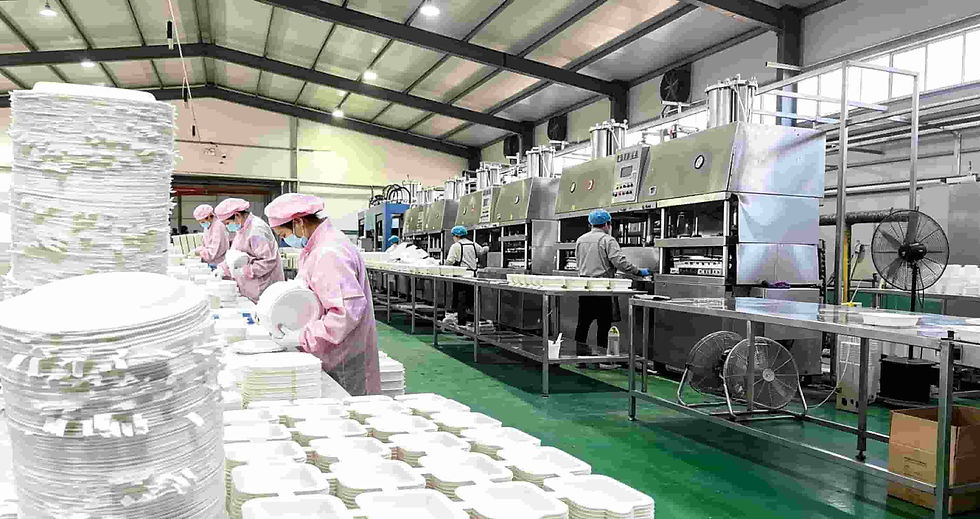
Selecting the right supplier is critical for aviation applications.
Airlines and catering companies should evaluate suppliers based on several factors.
Production Capability and Supply Stability
Airline catering requires large and consistent supply volumes.
A qualified supplier should demonstrate:
Stable production capacity;
Consistent quality control;
Reliable delivery schedules;
Export experience.
For airlines, packaging shortages can directly affect daily operations.
Therefore, supplier reliability is as important as product performance.
Product Customization Capability
Different airlines have different requirements.
A supplier should be able to support:
Customized sizes;
Customized shapes;
Logo printing;
Retail packaging;
Private label solutions.
For example, airlines may require customized:
Meal trays;
Food containers;
Cutlery packaging.
Customization allows sustainable packaging to become part of the airline brand identity.
Food Safety and Compliance Requirements
Airline catering suppliers must pay close attention to compliance.
Important documents may include:
Food contact safety reports;
Material specifications;
Compostability testing;
PFAS-free testing.
For international aviation markets, compliance documentation helps reduce purchasing risks.
Export Experience and International Logistics
Airline catering companies often operate across multiple countries.
Therefore, suppliers should understand:
International shipping;
Export documentation;
Container loading;
Delivery coordination.
A supplier with export experience can help ensure smoother cooperation.
Future Trends of Sustainable Airline Catering Packaging
The aviation industry is expected to continue moving toward more sustainable food service solutions.
Several trends will influence future packaging decisions.
More Renewable Fiber-Based Packaging
As businesses reduce dependence on fossil-based materials, renewable fibers will become increasingly important.
Potential materials include:
Sugarcane bagasse;
Bamboo fiber;
Molded pulp;
Other plant-based materials.
Among these options, bagasse has gained attention because it combines:
Renewable sourcing;
Practical performance;
Commercial availability.
Increased Demand for Plastic-Free Solutions
Airlines and passengers are becoming more aware of plastic waste issues.
Future Sustainable Airline Catering Packaging solutions will likely focus more on:
Plastic reduction;
Renewable materials;
Compostable designs.
Greater Focus on Complete Packaging Systems
Future sustainable packaging will not only consider individual products.
Companies will evaluate complete systems:
Material sourcing;
Manufacturing;
Transportation;
Usage;
End-of-life management.
This lifecycle approach will become increasingly important for airline catering decisions.
Frequently Asked Questions About Sustainable Airline Catering Packaging
What is sustainable airline catering packaging?
Sustainable airline catering packaging refers to food packaging solutions designed to reduce environmental impact while maintaining the performance required for aviation food service operations.
These solutions may include renewable materials, compostable packaging, and plastic-free alternatives.
Why are airlines looking for alternatives to plastic packaging?
Airlines are exploring alternatives because of increasing concerns about plastic waste, sustainability goals, passenger expectations, and future packaging regulations.
Is bagasse tableware suitable for airline meals?
Yes. Bagasse tableware can be used for airline catering applications including meal trays, food containers, bowls, and disposable tableware.
It provides:
Good rigidity;
Heat resistance;
Oil resistance;
Sustainable material advantages.
Can bagasse packaging replace traditional airline meal trays?
Bagasse packaging can replace certain traditional disposable meal packaging applications depending on airline requirements, food types, and operational conditions.
What should airlines consider when selecting sustainable packaging suppliers?
Airlines should evaluate:
Product quality;
Certification documents;
Production capability;
Customization options;
Export experience;
Supply stability.
Conclusion
The aviation industry is entering a new stage where sustainability is becoming an important part of food service operations.
As airlines and catering companies look for ways to reduce environmental impact, traditional disposable packaging solutions are being reconsidered.
Sustainable Airline Catering Packaging provides a pathway toward more responsible aviation food service by combining environmental benefits with practical performance requirements.
Among available solutions, sugarcane bagasse tableware offers significant potential because it provides:
Renewable fiber materials;
Compostable packaging options;
Plastic-free alternatives;
Reliable food service performance.
For airlines, catering companies, and aviation suppliers, choosing the right packaging solution today can help build a more sustainable future for in-flight dining.
Looking for Sustainable Airline Catering Packaging Solutions?
Mana Eco supplies sugarcane bagasse plates, meal trays, food containers, and customized compostable packaging solutions for global businesses.
Our solutions support:
✅ Renewable sugarcane fiber materials✅ OEM customization✅ Sustainable food service applications✅ Export-oriented supply solutions


Comments