
PE vs PLA vs Water-Based Barrier Coating: Choosing the Right Technology for Food Packaging Systems

Introduction: Why Food Packaging Coating Technology Matters
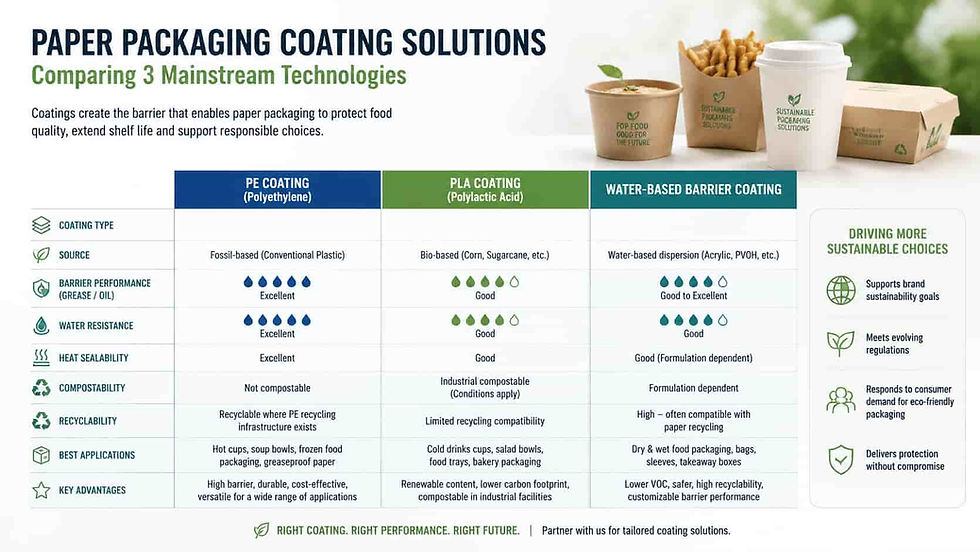
The global food packaging industry is undergoing a major transformation.
For decades, traditional plastic coatings such as polyethylene (PE) have dominated the market because of their excellent barrier performance, reliability, and low production cost.
However, increasing environmental regulations, brand sustainability goals, and consumer expectations are driving demand for alternative solutions.
Today, packaging manufacturers and food brands are evaluating different coating technologies, including:
PE coating
PLA coating
Water-based barrier coating
Each technology provides different advantages depending on:
moisture protection requirements
food application
temperature conditions
sustainability targets
recycling infrastructure
production cost
There is no single coating solution suitable for every packaging application.
The correct choice depends on balancing:
Performance + Sustainability + Cost + End-of-Life Management
This article provides a complete technical comparison of PE vs PLA vs Water-Based Barrier Coating to help packaging buyers understand the differences and select the most suitable solution.
Understanding PE vs PLA vs Water-Based Barrier Coating Technologies
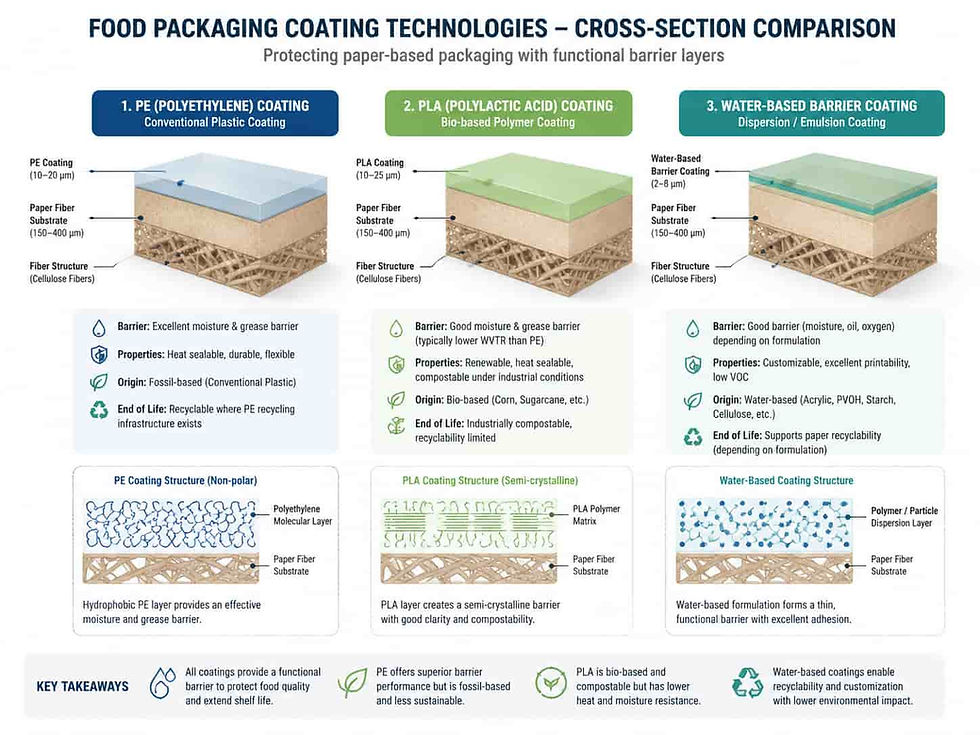
Food packaging coatings are functional layers applied onto packaging substrates to improve performance.
Common substrates include:
paperboard
molded fiber
sugarcane bagasse
paper cups
food containers
The main purpose of coatings is to improve:
moisture resistance
oil resistance
food protection
mechanical durability
shelf-life performance
Different coating technologies achieve these goals through different mechanisms.
PE Coating: Traditional High-Performance Barrier Technology
What Is PE Coating?
PE (Polyethylene) coating is one of the most widely used barrier technologies in food packaging.
It creates a plastic protective layer on paper or fiber substrates.
The most common type is:
LDPE (Low-Density Polyethylene)
because it provides:
flexibility
sealing performance
excellent moisture resistance
Advantages of PE Coating
Excellent Moisture Barrier
The biggest advantage of PE coating is water resistance.
The polyethylene layer prevents:
liquid penetration
paper weakening
structural failure
This makes PE suitable for:
beverage cups
liquid packaging
takeaway containers
Strong Oil Resistance
PE provides good protection against:
grease
oils
sauces
This is important for:
fried foods
fast food packaging
ready meals
Mature Manufacturing Technology
PE coating has decades of industrial experience.
Advantages include:
stable supply chain
high-speed production compatibility
predictable performance
Cost Efficiency
Compared with many alternatives, PE remains economically attractive because of:
large-scale production
established technology
competitive resin prices
Limitations of PE Coating
Despite its advantages, PE coating has several challenges.
Fossil-Based Material
Traditional PE is produced from petroleum resources.
This creates concerns related to:
carbon emissions
fossil dependency
Recycling Challenges
PE coated paper packaging can be difficult to recycle because it combines:
paper fiber
plastic layer
Separation requires additional processing.
Limited Sustainability Position
For brands seeking:
compostable certification
plastic reduction goals
zero plastic packaging
PE may not be the preferred solution.
PLA Coating: Bio-Based Compostable Packaging Technology
What Is PLA Coating?
PLA (Polylactic Acid) coating is a bio-based polymer coating produced from renewable resources.
Common raw materials include:
corn starch
sugarcane
cassava
PLA provides a sustainable alternative to traditional petroleum-based coatings.
Advantages of PLA Coating
Renewable Material Source
Unlike traditional PE, PLA originates from renewable agricultural resources.
This provides advantages in:
carbon reduction strategies
sustainable branding
renewable material positioning
Compostable Packaging Potential
PLA can be composted under suitable industrial composting conditions.
This makes it attractive for:
eco-conscious brands
compostable packaging programs
Strong Consumer Appeal
Many brands choose PLA because it supports:
environmental marketing
sustainable product positioning
consumer expectations
Limitations of PLA Coating
Lower Heat Resistance
PLA has lower thermal performance compared with PE and CPET.
It is generally unsuitable for:
oven applications
high-temperature cooking
extreme heat exposure
Composting Infrastructure Requirement
PLA requires:
industrial composting facilities
controlled temperature
suitable microbial environment
Without proper infrastructure, its environmental advantage may be reduced.
Higher Cost
PLA production costs remain higher because of:
renewable raw materials
production complexity
smaller market scale
Water-Based Barrier Coating: The Plastic-Free Direction
What Is Water-Based Barrier Coating?
Water-based barrier coating is a functional coating technology designed to improve fiber packaging performance without using traditional plastic layers.
Unlike PE and PLA, the coating is not a thick plastic film.
Instead, it uses specially formulated polymer dispersions applied onto fiber surfaces.
Advantages of Water-Based Barrier Coating
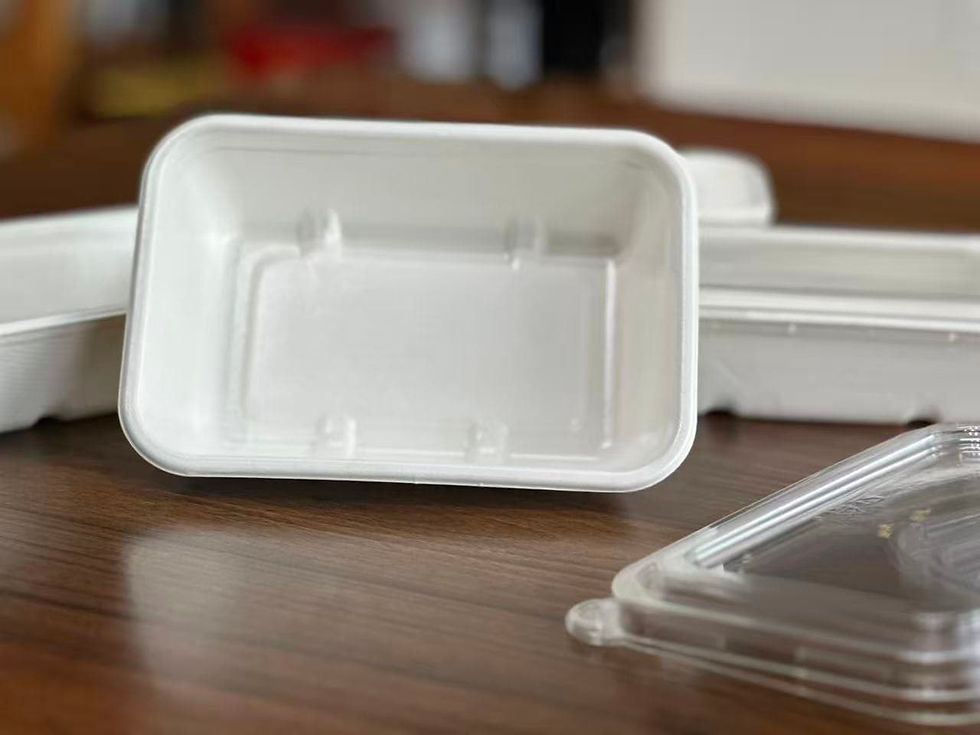
Plastic Reduction Potential
The biggest advantage is reducing dependence on traditional plastic coatings.
This supports:
paper recycling goals
plastic reduction strategies
sustainable packaging development
Better Compatibility With Fiber Packaging
Water-based coatings are especially suitable for:
paper packaging
molded fiber containers
sustainable food packaging
Improved Recycling Potential
Compared with PE laminated structures, some water-based barrier systems are easier to process within fiber recycling systems.
Limitations of Water-Based Barrier Coating
Technology Development Stage
Compared with PE, water-based coatings are newer.
Challenges include:
formulation optimization
production consistency
application requirements
Performance Depends on Formulation
Different formulations provide different levels of:
water resistance
oil resistance
heat resistance
PE vs PLA vs Water-Based Barrier Coating Comparison Table
Feature | PE Coating | PLA Coating | Water-Based Barrier Coating |
Material Type | Petroleum-based polymer | Bio-based polymer | Functional coating system |
Main Purpose | Strong barrier protection | Sustainable coating | Fiber performance improvement |
Moisture Resistance | Excellent | Medium | Medium–High |
Oil Resistance | Excellent | Medium | Medium–High |
Heat Resistance | Medium | Low–Medium | Medium |
Renewable Source | No | Yes | Depends on formulation |
Compostability | No | Yes (Industrial) | Depends on system |
Recycling Compatibility | Limited | Limited | Higher potential |
Cost | Low | High | Medium |
Technology Maturity | Very High | High | Developing |
CPET: A Different Category of Packaging Material
It is important to note that CPET is not a coating technology.
Instead, CPET is a high-performance packaging material.
It is mainly used where extreme temperature resistance is required.
Applications:
frozen meals
oven-ready food trays
airline catering
Compared with coating systems:
Material | Main Advantage |
PE Coating | Barrier performance |
PLA Coating | Sustainability |
Water-Based Barrier | Plastic reduction |
CPET | High temperature performance |
How to Choose the Right Food Packaging Coating?
The best solution depends on application requirements.
For Maximum Barrier Performance
Recommended:
PE Coating
Best for:
liquids
oily foods
cost-sensitive packaging
For Compostable Packaging Goals
Recommended:
PLA Coating
Best for:
sustainable brands
cold food packaging
compostable products
For Plastic Reduction Strategies
Recommended:
Water-Based Barrier Coating
Best for:
fiber packaging
paper-based solutions
recyclable packaging goals
For High Temperature Food Applications
Recommended:
CPET
Best for:
oven heating
frozen meals
industrial catering

Future Trends of Food Packaging Coating Technologies
Between 2025 and 2035, the packaging industry will move toward multiple technology solutions.
Key trends include:
Reduced Plastic Usage
Brands are looking for alternatives to traditional plastic coatings.
Bio-Based Materials Growth
PLA and other renewable polymers will continue expanding.
Advanced Barrier Coatings
Water-based barrier technologies will continue improving.
Circular Packaging Systems
Future packaging will focus on:
recyclability
compostability
resource efficiency
Conclusion: No Single Coating Technology Fits Every Application
PE, PLA, and Water-Based Barrier Coatings each solve different packaging challenges.
PE remains the benchmark for:
barrier performance
cost efficiency
industrial reliability
PLA provides:
renewable material advantages
compostable packaging opportunities
Water-Based Barrier Coating represents:
plastic reduction
future fiber packaging innovation
The future of food packaging will not be dominated by one material.
Instead, successful packaging solutions will combine:
performance requirements + sustainability goals + application needs
Choosing the right coating technology is the key to building efficient and responsible food packaging systems.
FAQ
What is the difference between PE and PLA coating?
PE coating provides stronger moisture and oil resistance, while PLA coating offers renewable material advantages and compostable packaging potential.
Which coating is best for food packaging?
The best coating depends on application requirements.
PE is suitable for strong barriers, PLA for compostable packaging, and water-based coatings for plastic reduction strategies.
Is PLA coating better than PE coating?
PLA is more sustainable, while PE provides better barrier performance and lower cost.
Neither material is universally better; the choice depends on packaging requirements.
Is water-based barrier coating plastic-free?
Many water-based barrier coatings are designed to reduce or eliminate traditional plastic layers, but performance depends on the specific formulation.
Can PE coating be replaced by sustainable alternatives?
In some applications yes, but PE remains important where strong barrier performance and cost efficiency are required.
Which coating is suitable for sugarcane bagasse packaging?
Water-based barrier coating and PLA coating are commonly considered for improving bagasse packaging performance while maintaining sustainable positioning.
Will compostable coatings replace traditional plastic coatings?
Compostable coatings will continue growing, but traditional coatings will remain important for applications requiring maximum performance.
How should food brands choose packaging coating technology?
Brands should evaluate:
food type
temperature requirements
barrier performance
sustainability goals
local waste infrastructure
before selecting a coating system.
If you are serious about sourcing eco-friendly food packaging:
👉 Don’t rely on guesswork.
We can help you:
Verify product quality
Provide certified samples
Offer stable long-term supply
Email: abel@mana-eco.com WhatsApp: +86 13867471335


Comments