
How to Choose a Reliable Compostable Packaging Supplier in 2026

Meta Title
How to Choose a Reliable Compostable Packaging Supplier | B2B Sourcing Guide
Meta Description
Learn how to choose a reliable compostable packaging supplier in 2026. Complete B2B guide covering certifications, PFAS compliance, factory audits, MOQ, quality control, pricing, and sourcing risks.
How to Choose a Reliable Compostable Packaging Supplier in 2026

As the global demand for sustainable food packaging continues to rise, businesses worldwide are searching for reliable compostable packaging suppliers that can provide stable quality, regulatory compliance, and long-term supply capacity.
However, sourcing eco-friendly packaging products is becoming increasingly complex.
Importers now face several critical challenges:
PFAS compliance risks
Fake certifications
Inconsistent product quality
Shipping instability
Rising raw material costs
Unreliable suppliers
Greenwashing claims
For wholesalers, distributors, supermarkets, restaurant chains, and foodservice brands, choosing the right supplier is no longer just about pricing.
It is about protecting long-term business stability.
This guide explains how buyers can properly evaluate compostable packaging manufacturers in 2026 and avoid common sourcing mistakes.
Why Supplier Selection Matters More Than Ever
The sustainable packaging industry has grown rapidly over the last few years.
Unfortunately, rapid growth has also created problems such as:
Inexperienced suppliers
Poor quality control
Fake compostability claims
Weak production systems
Unstable lead times
At the same time, global regulations are becoming stricter.
Many importers now need suppliers that can support:
Retail packaging requirements
Sustainability reporting
As a result, supplier reliability has become one of the most important competitive factors for buyers.
What Is a Reliable Compostable Packaging Supplier?
A reliable supplier is not simply a factory that offers cheap pricing.
A professional manufacturer should provide:
Stable product quality
Verified certifications
Long-term production capacity
Strong export experience
Clear communication
Compliance support
Consistent lead times
The goal is to establish a long-term partnership rather than a one-time transaction.
Key Factors Buyers Should Evaluate
1. Real Manufacturing Capability
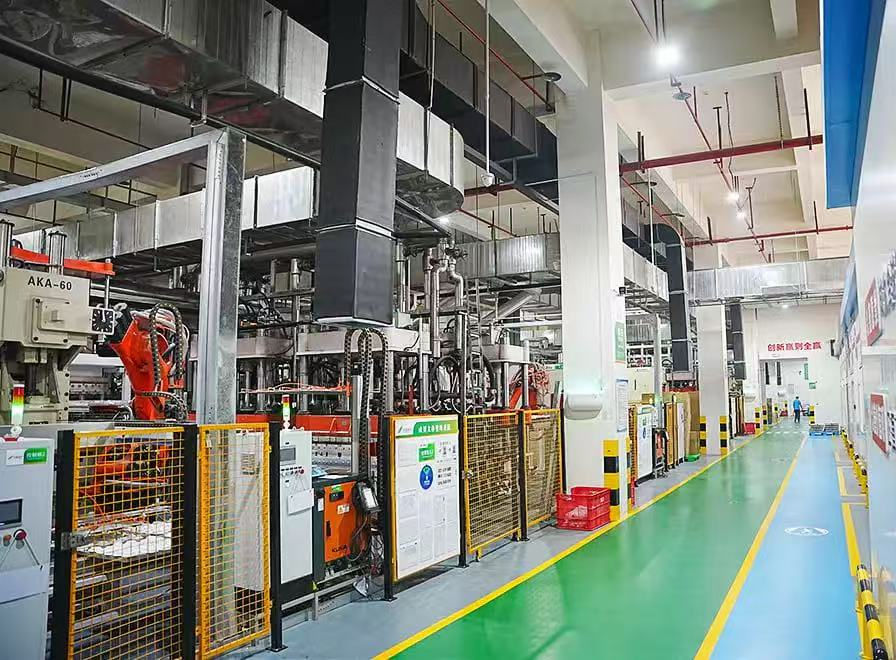
One of the biggest mistakes buyers make is assuming every supplier is a real manufacturer.
In reality, many companies are only trading firms.
This can create problems such as:
Unstable pricing
Weak quality control
Delayed communication
Poor production visibility
How to Verify a Real Factory
Buyers should request:
Factory videos
Production line photos
Audit reports
Business licenses
Manufacturing certifications
Professional manufacturers are usually transparent about:
Equipment
Automation
Production capacity
Mold systems
QC procedures
Why Factory Scale Matters
Larger manufacturing systems often provide:
Better consistency
More stable lead times
Stronger raw material sourcing
Better export capability
This is especially important for:
Supermarkets
Restaurant chains
National distributors
2. Product Quality Control Systems
Quality control is critical in compostable packaging.
Poor-quality products can lead to:
Leakage
Deformation
Customer complaints
Retail rejection
Brand reputation damage
Key QC Areas Buyers Should Check
QC Area | Importance |
Raw material testing | Ensures fiber quality |
Production monitoring | Prevents inconsistencies |
Heat resistance testing | Food safety performance |
Oil & water resistance | Functional quality |
Packaging inspection | Export protection |
Professional suppliers should have documented QC procedures.
3. Certification Verification
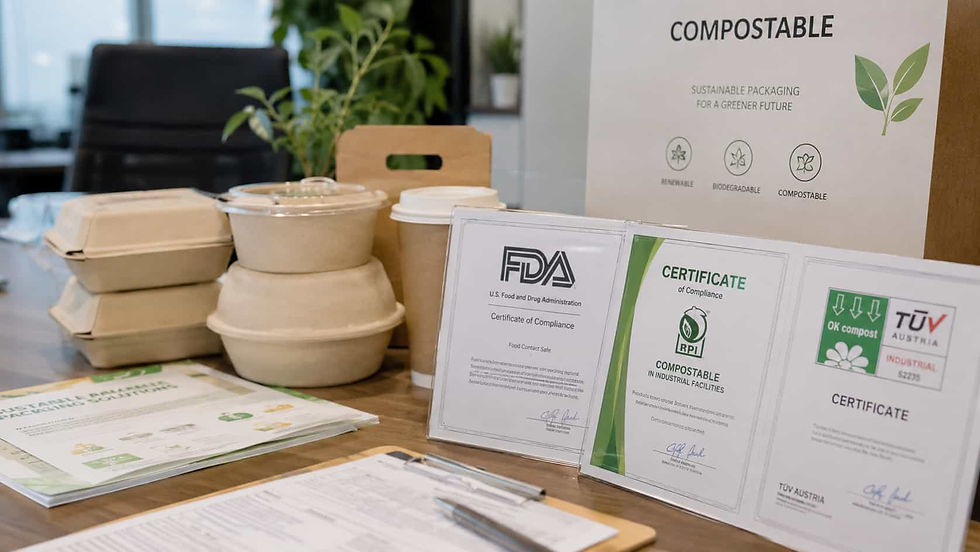
Certifications are one of the most important parts of supplier evaluation.
However, buyers should understand that not all certifications are equal.
Some suppliers may provide:
Expired reports
Fake certificates
Irrelevant testing documents
Important Certifications in 2026
Certification | Market |
FDA | United States |
North America | |
OK Compost | Europe |
EN13432 | European Union |
LFGB | Germany |
PFAS-Free Reports | Global compliance |
Always verify:
Valid dates
Laboratory information
Product scope
Report authenticity
4. PFAS-Free Compliance
PFAS compliance has become a major issue in molded fiber packaging.
Many buyers now require:
PFAS-free declarations
Chemical testing reports
Third-party verification
Suppliers that cannot provide PFAS documentation may create legal or import risks.
This is especially important in:
United States
Canada
Europe
5. Production Capacity & Supply Stability

Stable supply chains are becoming increasingly important.
Buyers should evaluate:
Monthly capacity
Peak-season performance
Backup production planning
Raw material stability
Unstable suppliers may struggle during periods of high demand.
This creates inventory risks for distributors and retailers.
Supply stability is becoming one of the most important decision-making factors for food packaging distributors and restaurant chains.
6. MOQ Flexibility
MOQ requirements vary between suppliers.
Buyers should understand:
Standard MOQ
OEM MOQ
Custom mold MOQ
Mixed container options
Smaller buyers may prefer suppliers offering flexible MOQ strategies.
7. OEM & Product Development Capability
Many distributors now require:
Custom branding
Private label packaging
Custom molds
Retail-ready packaging
Professional manufacturers should support:
Artwork development
Mold customization
Packaging design
Branding solutions
Professional manufacturers should support artwork development, mold customization, packaging design, and branding solutions.
8. Export Experience & Logistics Support
International shipping is one of the biggest challenges in global sourcing.
Experienced suppliers should understand:
Customs documentation
HS codes
Pallet standards
Carton optimization
Container loading
Strong export coordination can significantly reduce shipping risks.
Common Red Flags Buyers Should Avoid
Extremely Low Prices
Very low pricing often indicates:
Poor raw materials
Weak QC systems
Thin product walls
Inconsistent production
Cheap products can become expensive when quality problems occur.
Lack of Transparency
Avoid suppliers unwilling to provide:
Factory information
Testing reports
Production details
QC documentation
Poor Communication
Slow or unclear communication often leads to:
Order mistakes
Delays
Misunderstandings
Production issues
No PFAS Documentation
In 2026, PFAS compliance is becoming essential.
Suppliers without chemical testing reports create significant risks.
Why Long-Term Partnerships Matter

The best suppliers are usually not short-term price competitors.
Strong long-term partnerships provide:
Better production scheduling
More stable pricing
Priority during busy seasons
Faster product development
Better quality consistency
Reliable partnerships are especially valuable in volatile shipping markets.
Future Trends in Compostable Packaging Sourcing
Several major trends are reshaping the industry.
1. PFAS-Free Packaging Will Become Standard
More countries are introducing restrictions on fluorinated chemicals in food packaging.
PFAS-free compliance will likely become mandatory in more markets.
2. Buyers Will Focus More on Supply Chain Stability
Global logistics disruptions have made stable suppliers more valuable than low-cost suppliers.
3. OEM Branding Demand Will Continue Growing
Restaurants and retailers increasingly want customized sustainable packaging solutions.
4. Regulatory Compliance Will Become More Important
Suppliers must increasingly support:
Sustainability reporting
Food-contact safety
Compostability verification
Environmental compliance
Conclusion
Choosing a reliable compostable packaging supplier in 2026 requires much more than comparing prices.
Buyers should carefully evaluate:
Manufacturing capability
Quality control systems
Certifications
PFAS compliance
Export experience
Supply stability
OEM capabilities
The right supplier can help importers reduce risks, improve competitiveness, and build long-term sustainable packaging businesses.
As global regulations and sustainability expectations continue evolving, professional supplier selection will become one of the most important strategic decisions for distributors and foodservice brands worldwide.
FAQ
What certifications should compostable packaging suppliers provide?
Common certifications include FDA, BPI, OK Compost, EN13432, LFGB, and PFAS-free testing reports.
Why is PFAS-free compliance important?
PFAS chemicals are increasingly restricted in food packaging regulations worldwide.
How can buyers verify a real manufacturer?
Buyers should request factory audits, production videos, certifications, and manufacturing documentation.
What is a typical MOQ for compostable packaging?
MOQ varies depending on product type and customization requirements.
Are cheap suppliers risky?
Yes. Extremely low pricing may indicate poor materials, weak QC systems, or unstable production.
Why is long-term supplier cooperation important?
Stable partnerships help ensure better pricing, consistent quality, and reliable lead times.
What should buyers check before placing an order?
Buyers should verify:
Certifications
QC systems
PFAS compliance
Production capacity
Export experience
Packaging quality

Comments